


The Hotel Industry Wasn’t Built for This. Nothing Was.

Skift Take
ICE's Operation Metro Surge in Minneapolis revealed what happens when hotels become political battlegrounds — and why the industry isn't ready for what's coming.
The Hampton Inn off Interstate 35 in Lakeville, Minnesota, is not the kind of place that typically generates national controversy. It’s a suburban property that, until recently, was part of the Hilton franchise network. The sort of hotel that exists to be a functional, reliable node in a vast network of sameness.
Then came the Trump administration’s crackdown on illegal immigration — Operation Metro Surge — and someone at the hotel made a decision that severed it from Hilton entirely: they refused to provide lodging to Immigration and Customs Enforcement agents.
What followed was swift. The Department of Homeland Security blasted Hilton on X. Within 24 hours, Hilton Worldwide had terminated the owner’s franchise agreement. The Hampton Inn sign came down, as did the hotel’s reservation pipeline, and its place in a system where brand affiliation functions as a kind of commercial oxygen.
Depending on whom you ask, the Lakeville incident was an act of conscience, a breach of contract, or a business calculation made under duress. But whatever it was for the hotel owner, Everpeak Hospitality, it revealed a bigger vulnerability for the industry. Federal ICE agents are leaving Minnesota. But it won’t end there. President Donald Trump said the administration has identified five additional cities for similar operations – but declined to name them. That effectively put every major American hotel market on notice that it could be next.
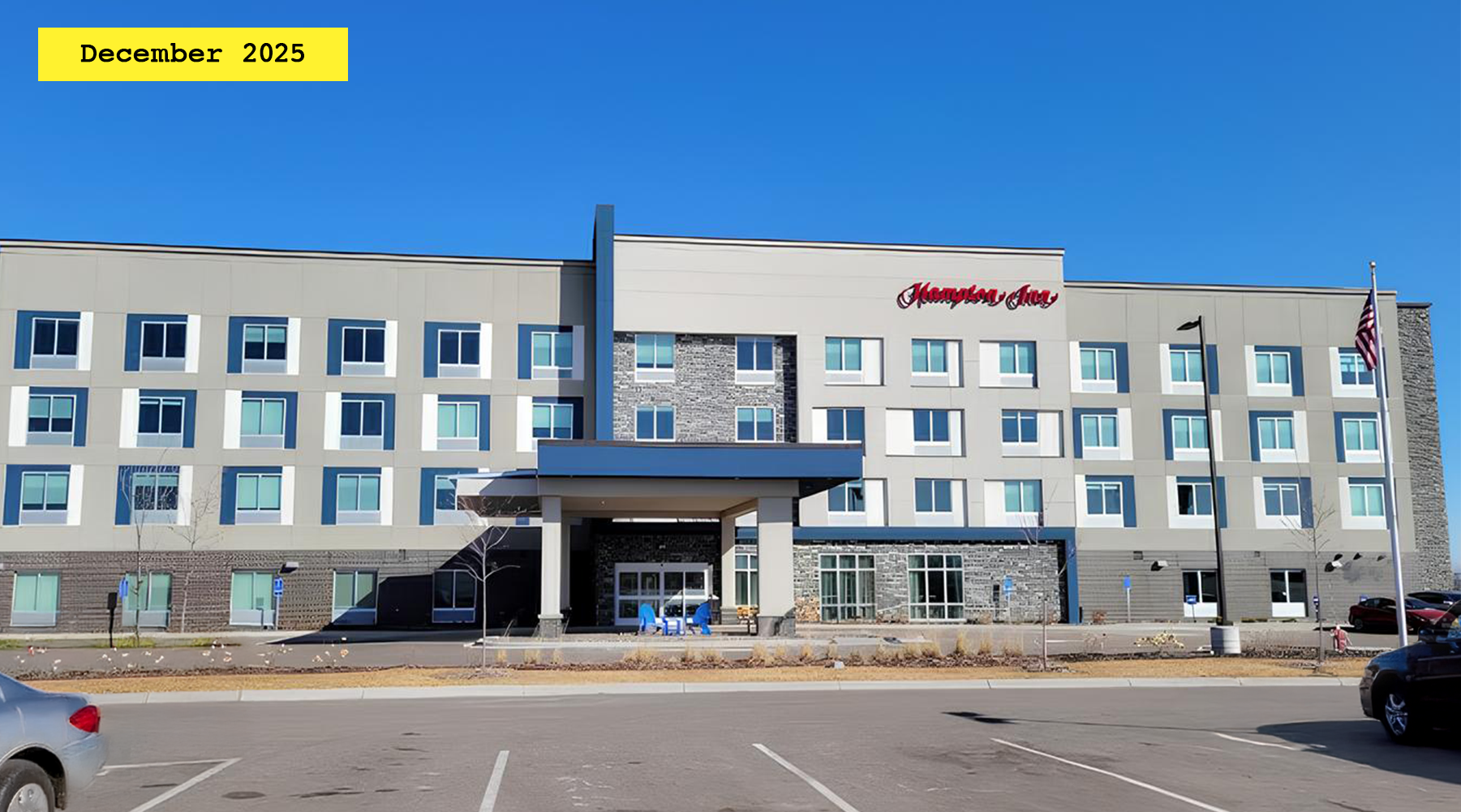
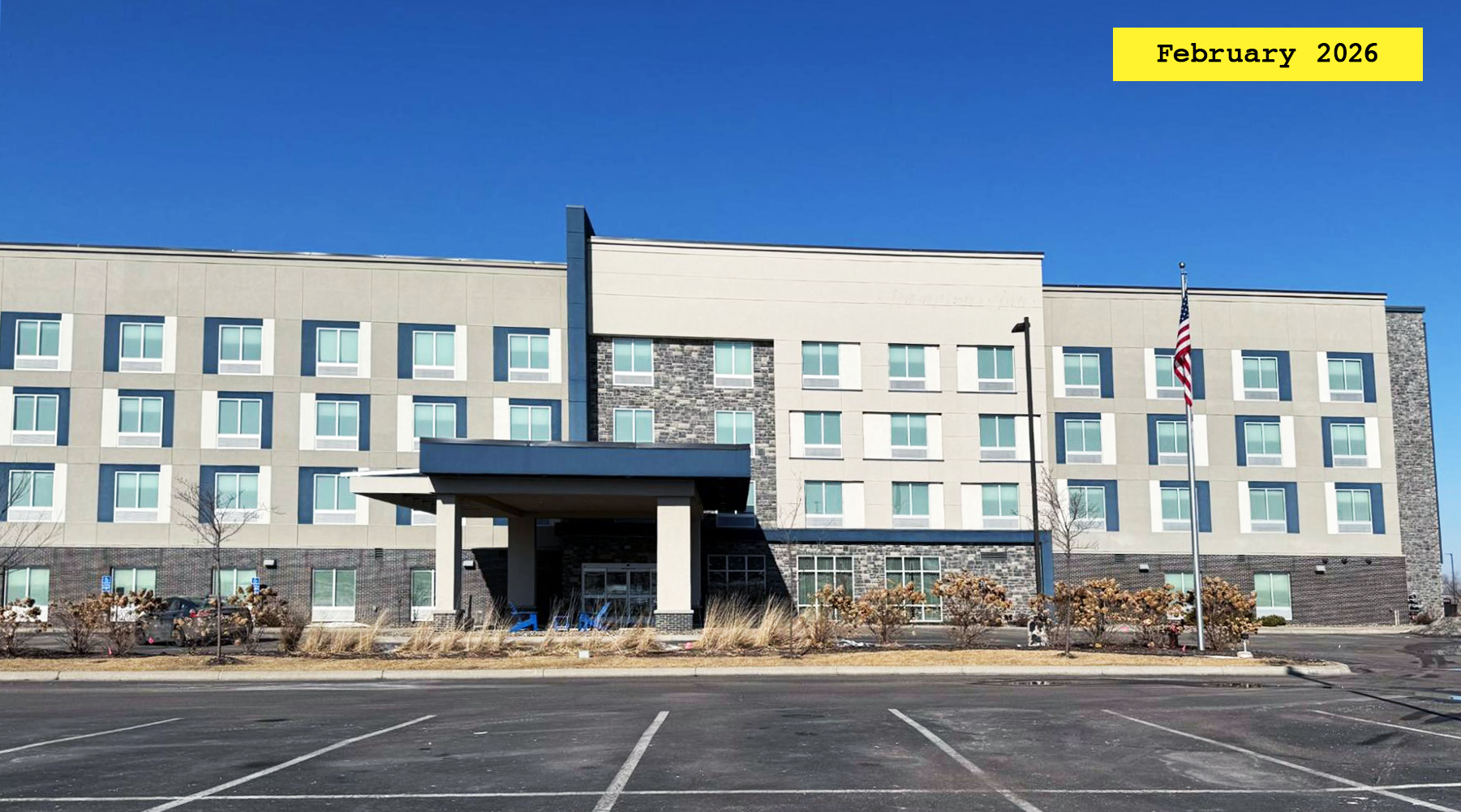
Photo Credit 2: Exterior view of Hampton Inn, Lakeville, Minneapolis. by Sarah Kopit, February 2026
The Machinery Beneath the Brand
In 2026, franchising is the hotel industry. Roughly 72% of chain hotel properties in the U.S. operate under franchise agreements with the major brands, according to Skift Research analysis of STR data. Marriott, Hilton, Hyatt, IHG, Wyndham, and Choice Hotels collectively control tens of thousands of properties while owning virtually none of them. The agreements that govern these relationships were never designed to handle the domestic crisis now unfolding.
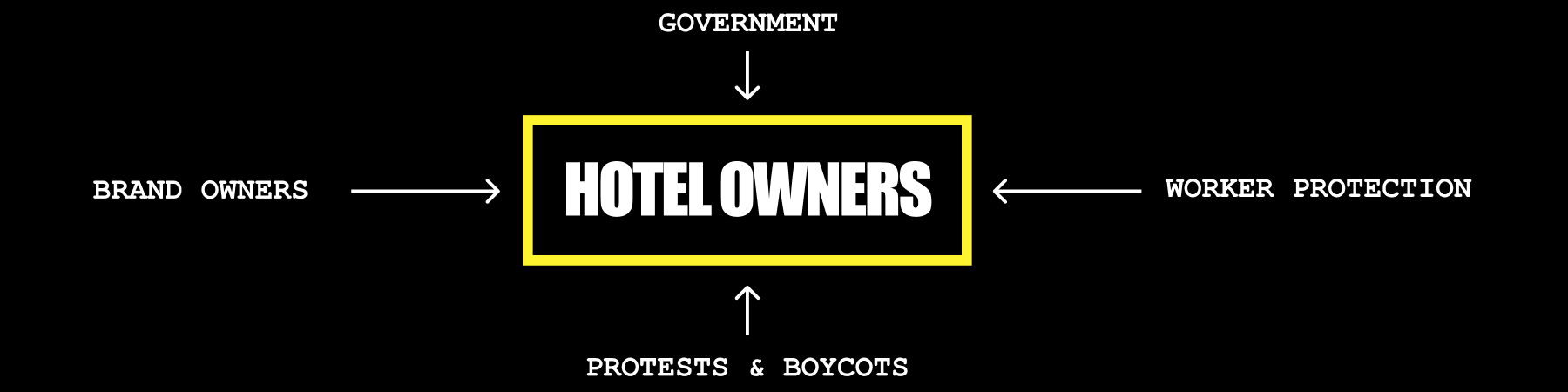
The franchise model pushes operational risk onto franchisees while the brand keeps control of its reputation. That works when these risks align. But it breaks when they don’t.
The Hampton Inn Franchise Disclosure Document – or FDD – is a sprawling, 392-page filing with the Federal Trade Commission. It governs every Hampton-flagged property in the country and specifies, among hundreds of other requirements, the approved vendors for exterior signs, the penalty for missing a quality assurance re-evaluation, and the monthly cost of the brand’s proprietary reservation software — down to the dollar.
What it does not contain is any meaningful framework for what happens when a hotel becomes a political battleground or any guidance for navigating the collision of law enforcement operations and community opposition.
But it does have a hammer.
Contained within Item 17 is Section 13.2(8). It permits Hilton to terminate the agreement instantly if the hotels, “engage in conduct that we reasonably determine is likely to adversely reflect upon or affect in any manner the reputation, goodwill, or business of the Hotel, the System, us and/or our Affiliates.”
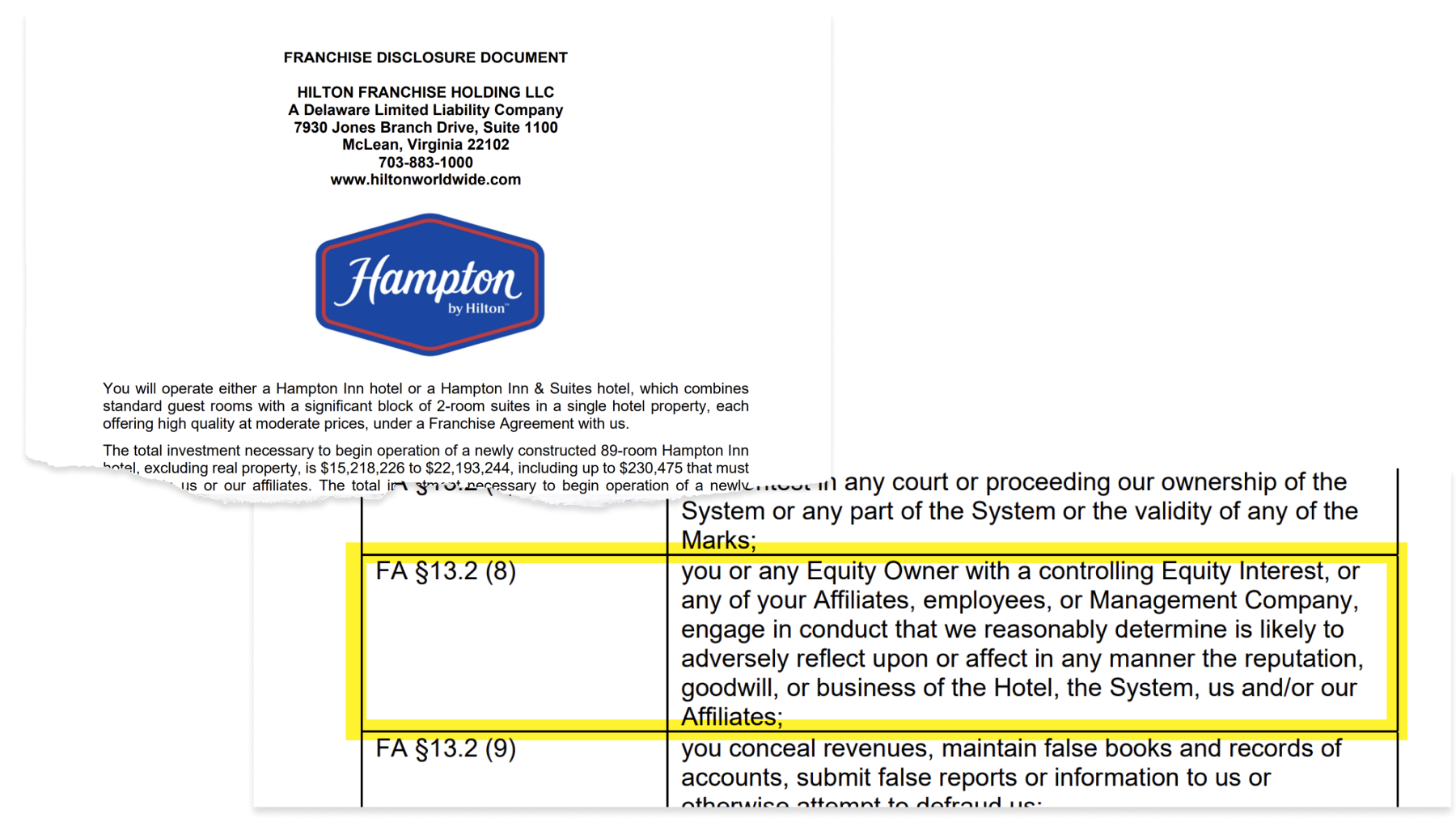
The language is, by design, almost limitlessly elastic.
It does not define what constitutes an adverse reflection. It does not require that the conduct be illegal, or even intentional. It requires only that Hilton, in its own reasonable judgment, conclude that the franchisee’s actions could tarnish the brand.
In Lakeville, that is almost certainly the clause that ended the franchise agreement. It is also a clause that exists, in nearly identical form, in thousands of hotel franchise agreements across the country.
“When you come into a franchisor-franchisee relationship, it’s not an equal position,” said Joshua Bowman, a hospitality attorney based in Boston. “The franchisee has virtually no bargaining position.”
‘It’s a No-Win Situation’
Meanwhile, elsewhere in Minneapolis, hotels that housed ICE learned that accepting those bookings carried consequences too. On January 9, 2026, police said over a thousand protesters targeted the Canopy Hotel and Depot Renaissance Hotel, both believed to be housing ICE agents.
A group forced entry into the Canopy Hotel before hotel security intervened. That same night, protesters caused approximately $6,000 in damage at the Depot Renaissance Hotel. Minneapolis Police declared an unlawful assembly, with around 200 officers assisting throughout the night. Twenty-nine people were arrested.
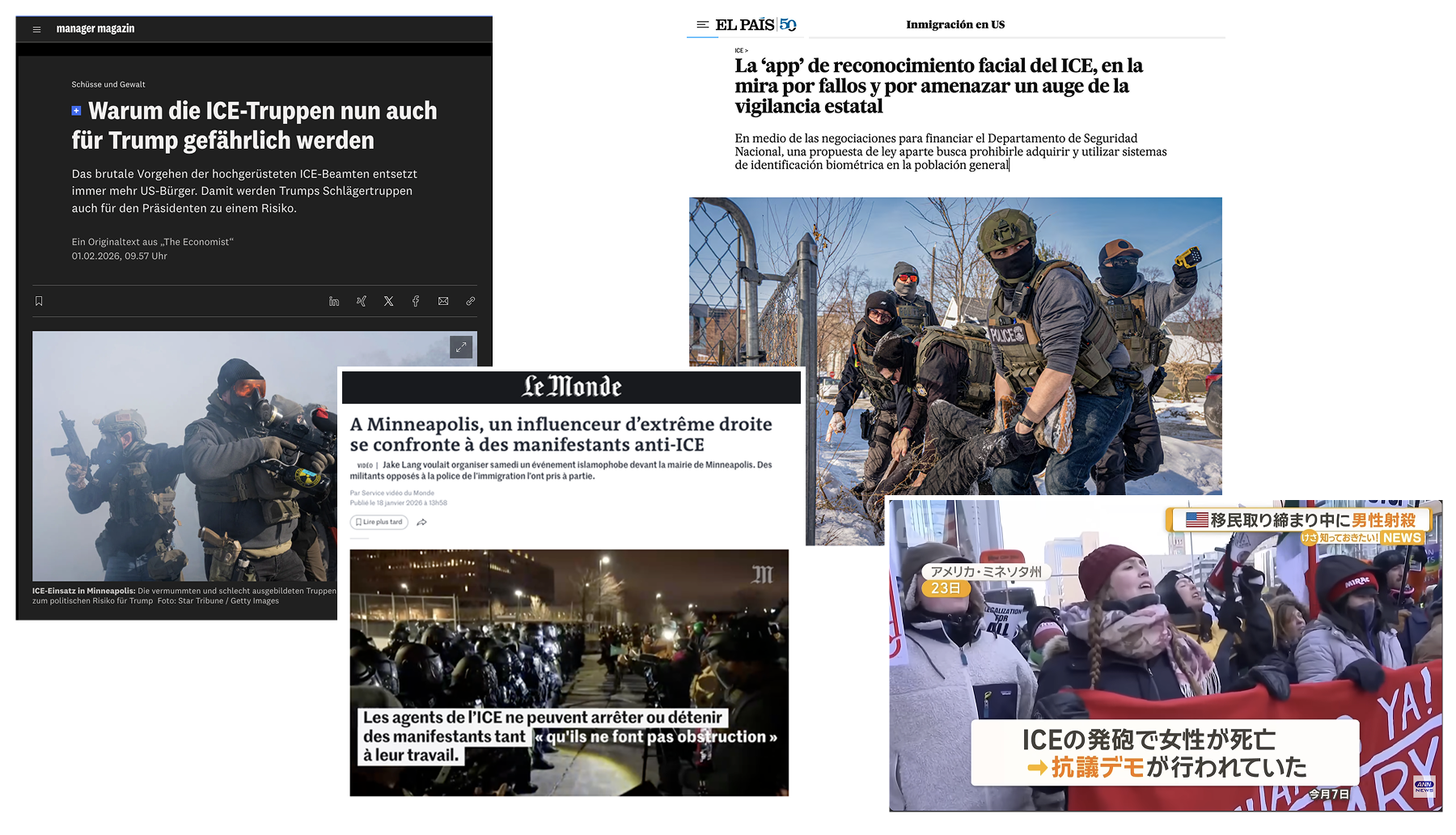
Protesters also began identifying more hotels around the Twin Cities — including, reportedly, where former border patrol commander Greg Bovino was staying. These demonstrations, dubbed noise protests, were loud by design, and included banging pots and pans, blowing whistles, playing instruments, and, in at least one case, bringing a full band into a parking lot to play Rage Against the Machine. They also sang hymns. The protests gained international attention.
The targeting was not random. The protest group the Sunrise Movement coordinated some of the noise demonstrations, which they call “Wide Awakes.” In order to identify where agents were staying, the group relied on an informal intelligence network of hotel workers, community members, and residents. Those tips were sent to organizers, who mapped nightly protest routes.
At the height of the demonstrations, it was common for the Sunrise Movement to hit multiple properties in a single night, usually clusters of hotels in suburban corridors. The noise was designed to make the buildings uninhabitable.
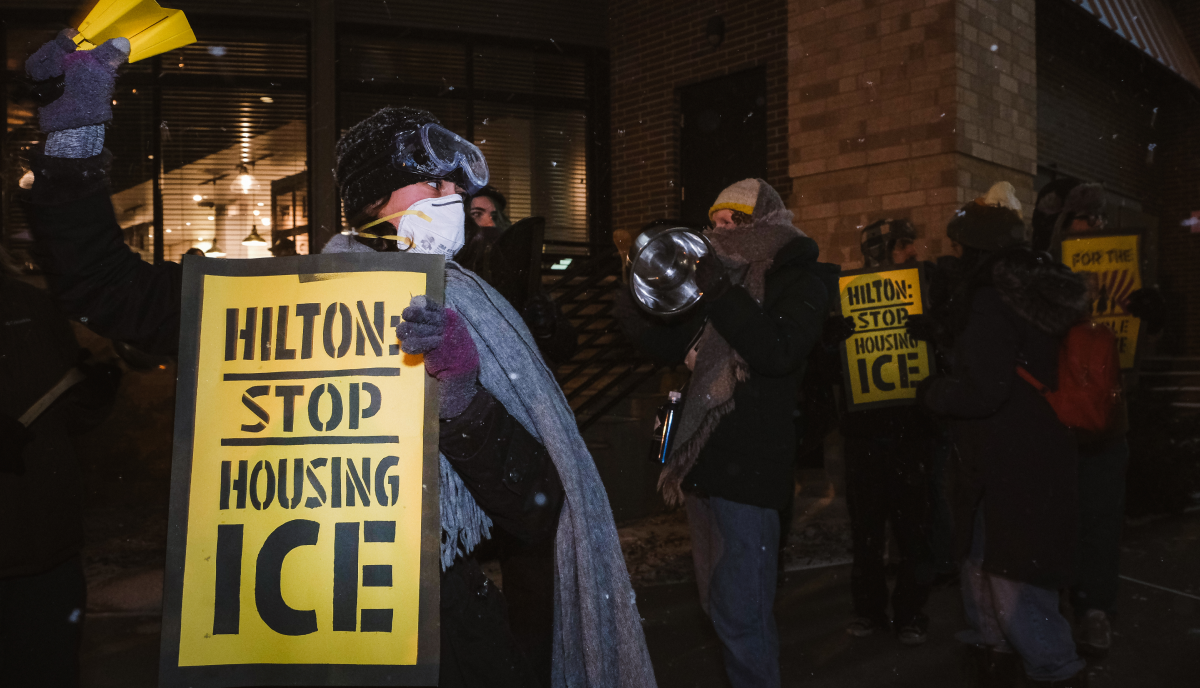
Photo credit: Sunrise Movement Twin Cities Hub
The pressure is not limited to outside the hotels. Protesters booked rooms where federal agents were staying — not to sleep, but to photograph agents unmasked in hallways and lobbies, according to a protest organizer who spoke to Skift on condition of anonymity.
Sunrise also encouraged supporters to book rooms and then cancel — an attempt to disrupt the business and send a message that cooperation with federal enforcement would carry a financial cost. Some left negative reviews on travel booking sites.
The pressure also moved into city government. On February 3, the Minneapolis City Council voted 8-5 to delay liquor license renewals for the Canopy by Hilton and The Depot even after the city attorney told members there were no legal grounds to deny them, according to the Star Tribune. Now even routine municipal approvals were being used as leverage.
“It’s a no-win situation” for hotel owners right now, said a hotel industry executive who spoke with Skift and declined to be named.
Who Keeps the Lights On
Between the protests and the terminations, it’s easy to lose sight of a more fundamental vulnerability for hotel owners. When a situation like Operation Metro Surge hits a city, many of the people who actually keep the hotels running won’t show up for work. One in three workers in the hotel and accommodation industry are immigrants, according to the American Immigration Council. That’s among the highest concentrations of any U.S. industry.
The scale of the enforcement operation in Minnesota impacted even workers with legal status. Christa Sarrack, President of Minnesota’s hospitality union UNITE HERE Local 17, told Skift hundreds of union workers have quit, refused shifts, or requested transfers since Operation Metro Surge began. Additionally, Sarrack said 17 of the union’s airport members were detained despite having legal authorization to work in the United States and passing extensive 10-year background checks required for airport badges.
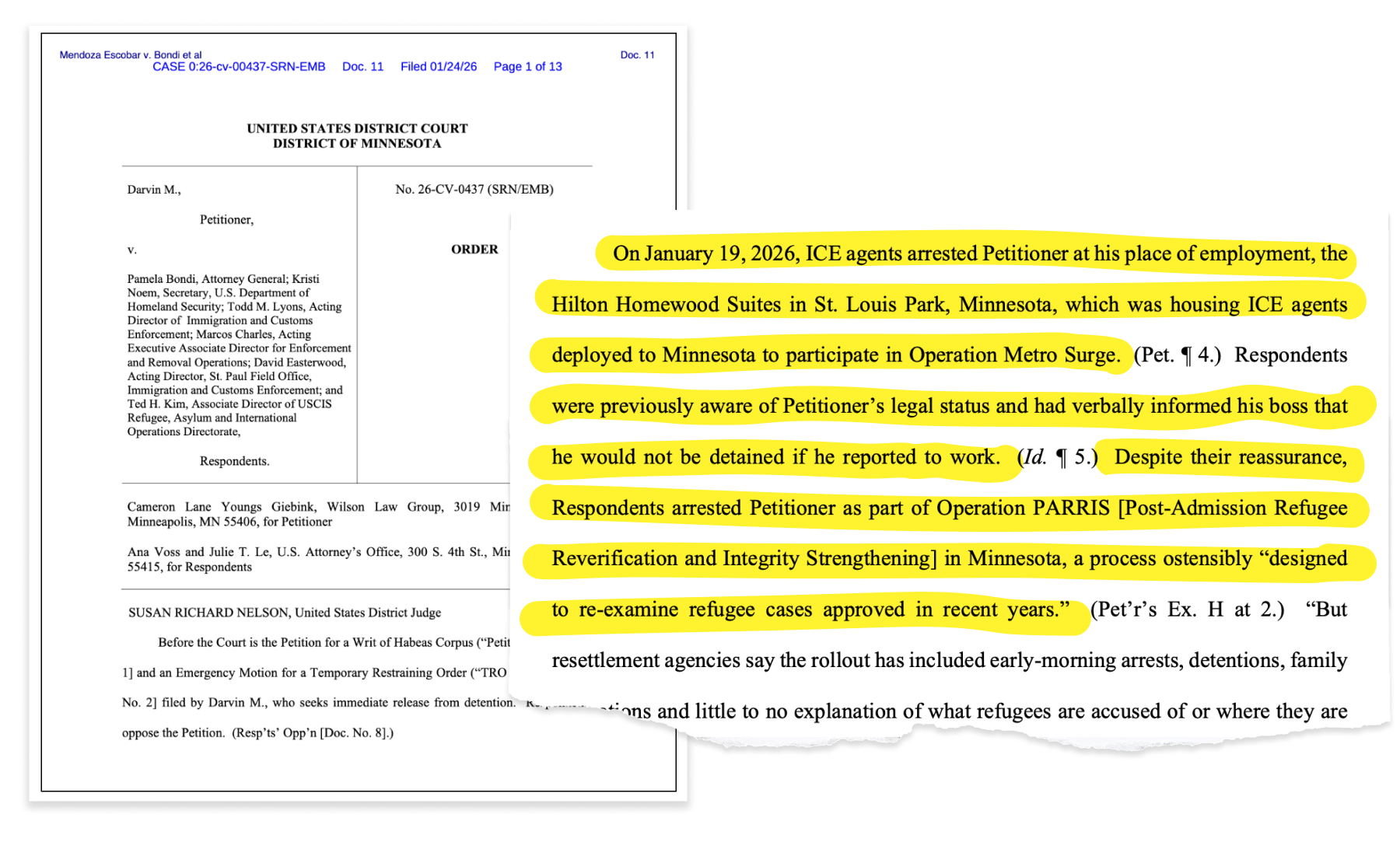
On January 19, a worker was arrested by ICE agents at the Hilton Homewood Suites in St. Louis Park, a hotel that was also housing ICE agents. The worker, a Nicaraguan refugee with legal work status and a pending application for permanent residency, was detained without a warrant while reporting for his shift, according to court documents. A federal judge ordered his release five days later, finding his detention violated both statutory law and the Fifth Amendment.
The Warrant Question
In a January 9 letter sent to members and authenticated by Skift, Local 17 made explicit what the demonstrations only implied. First, that hotels should stop providing lodging to federal immigration agents. And second, that hotels should require warrants before allowing ICE to coordinate enforcement operations from their properties.
The union’s argument is partly about worker safety, noting that immigration enforcement “can escalate tensions, increase confrontations, and place our members in unsafe situations they are not trained or paid to manage.” Gwen Mills, International Union President of Unite Here, which represents about 300,000 hotel and food service workers in the U.S. and Canada, claimed at a recent press conference in Washington, D.C., that ICE agents were drinking at hotel bars while armed and leaving weapons unattended.
Local 17’s letter is also a legal argument, and a pointed one. It invokes the Fourth Amendment’s prohibition on search and seizure without a warrant, noting that when a hotel manager or company consents to federal agents operating on private property, that consent effectively waives the constitutional protections that would otherwise apply.
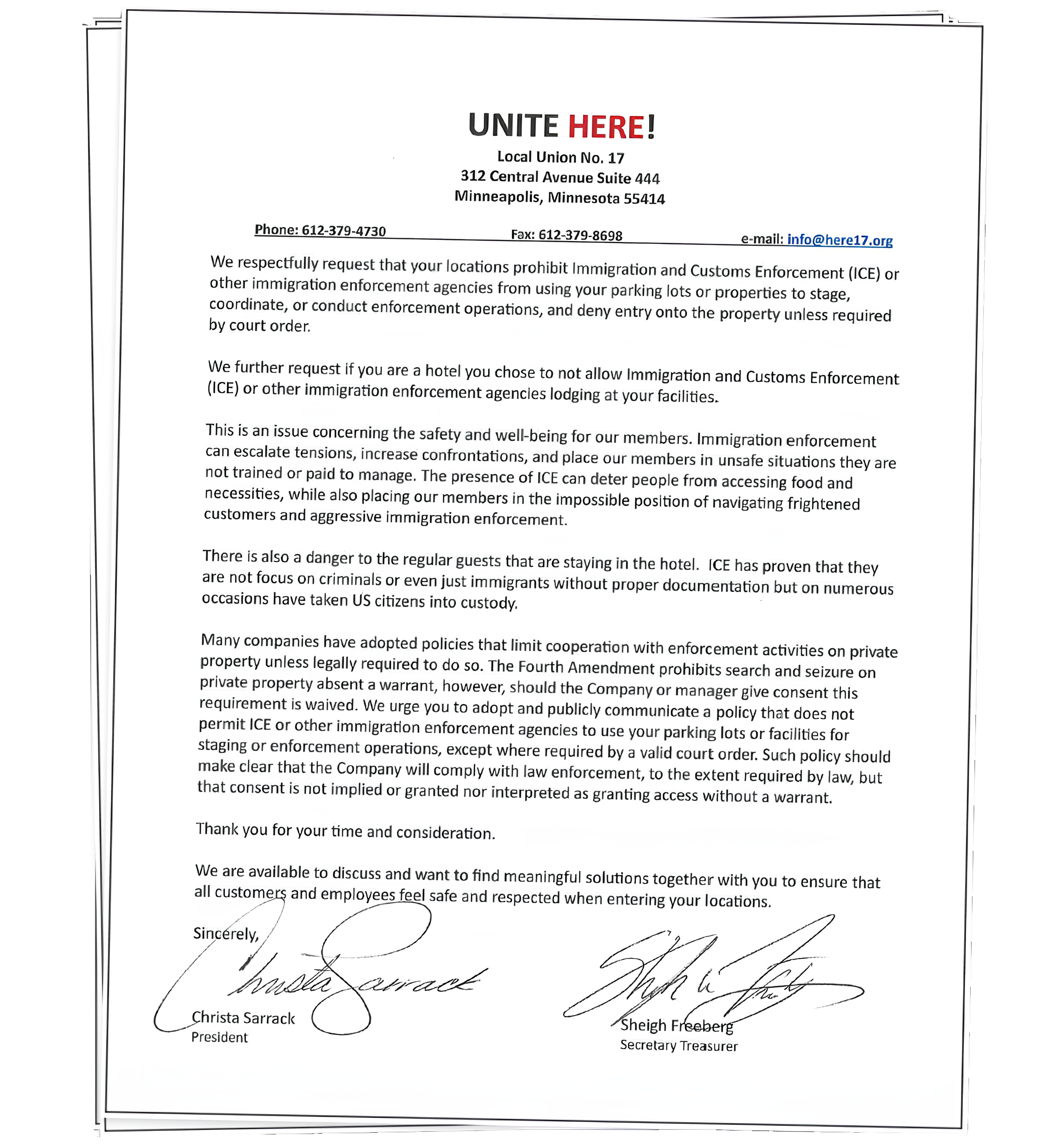
The union urges operators to adopt a public policy making clear that “the Company will comply with law enforcement, to the extent required by law, but that consent is not implied or granted nor interpreted as granting access without a warrant.”
It is, in effect, a template — a ready-made position for any hotel operator who wants one. And it reframes the question facing franchise owners in Minneapolis from a matter of political allegiance to one of legal exposure — not will you side with ICE or the protesters, but do you understand what you are consenting to when you open your doors? Bowman’s advice to a franchisee who found federal agents at their door was unambiguous: call a criminal defense attorney.
Sarrack said some hotels have responded to the union’s letter by removing government rates to deter ICE bookings, and many have instituted warrant requirements for access to back-of-house areas. “We have many of our employers who are saying, yes, without a warrant, they cannot go into the back of the house,” she said.
The Situation They’re In
In January, Marriott International CEO Anthony Capuano told investors that the company’s general managers were “wrapping their arms around associates” in Minneapolis. Sarrack was blunt about the disconnect. “You can wrap your arms around them all you want,” she said. “But it doesn’t fix the situation that they’re in.”
If any organization speaks for the franchisees caught between brand mandates and on-the-ground reality, it is the Asian American Hotel Owners Association. Its members, predominantly Indian American families, many of them second- or third-generation immigrants, own 60% of all hotels in the United States. When Skift reached out, the association declined to comment saying, “given the politically sensitive nature of this issue, the fact that it is still evolving, and the importance of accuracy, we are not providing comment at this time.”
The American Hotel and Lodging Association represents the industry more broadly — brands, management companies, and owners alike. When asked what guidance it was providing to members navigating the crisis, AHLA said its role was to “promote best practices in safety, hospitality, and responsible operations, while individual hotels make their own decisions consistent with their policies and local requirements.”
Marriott and IHG declined to comment for this story. Hyatt, Wyndham, and Choice did not respond to requests for comment. And a Hilton spokesperson told Skift, “Our hotels are places of public accommodation and strive to always be welcoming for all. We have continued to support our hotels and show care for our team members during this challenging time.”
The Costs No One Counted On
The financial toll of what happened in Minneapolis is still largely unquantified, but what’s measurable reveals a contradiction at the heart of the crisis.
Hotel occupancy for January in Minneapolis-St. Paul was up 17% year-over-year, the commercial real estate data firm CoStar told Skift, adding that the increase likely reflects the surge of federal agents. But that occupancy gain masks the operational chaos beneath it.
Online travel agency search volume for Minneapolis reached its peak during the week of January 11 — right as protests escalated. Then it collapsed. Search activity declined every week through the beginning of February, according to Lighthouse, a hospitality data provider.
Average hotel pricing tells a similar story. Rates that had climbed to $170 in early January dropped to $130 within weeks, before recovering slightly to the low $150s. More rooms filled, at lower rates, with a demand mix that has shifted from higher-value corporate and leisure travelers to government bookings that generate none of the ancillary revenue.
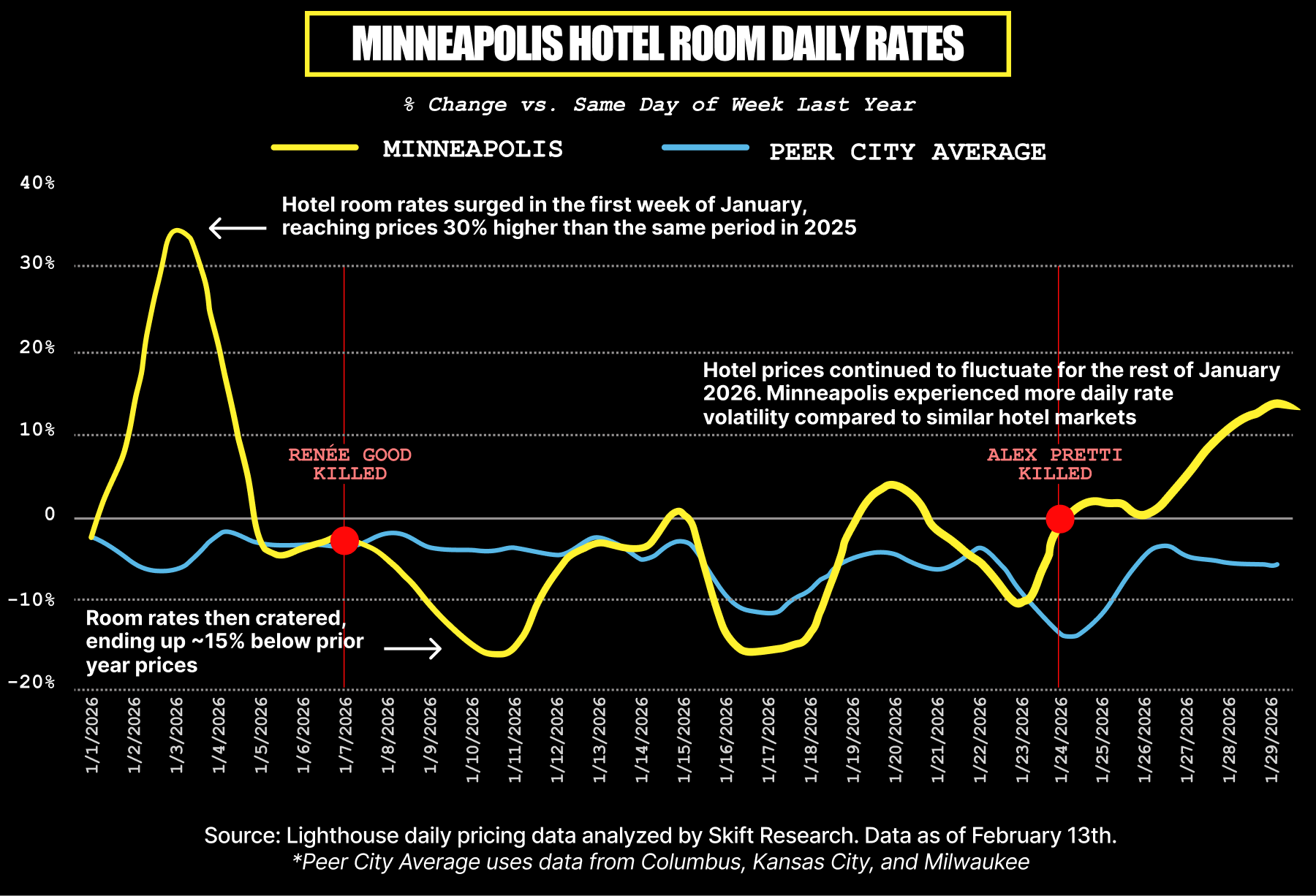
Meet Minneapolis, the city’s destination marketing organization, told Skift it conducted an informal survey of its roughly 500 partner hotels and restaurants in the second week of January. The effects were immediate: 90% reported their business had been impacted. The Minneapolis Convention Center has seen two cancellations for the first quarter — one in early January, one in February.
At least two hotels determined the safest response was to stop operating entirely. Mille Lacs Corporate Ventures closed both of its St. Paul properties — the InterContinental Saint Paul Riverfront and the DoubleTree by Hilton Downtown St. Paul — during Operation Metro Surge, citing “unique current public safety challenges.” The hotels shuttered while the company told Skift it developed “new protocols and training.” They have reopened. Still, even a temporary closure means zero revenue and staff sent home without shifts.
If hotels need extra security, those costs add another layer to the financial damage. A comprehensive security program for a property under sustained protest runs between $90 and $150 per hour, according to Pinkerton, the risk management firm. For a 150-room suburban hotel operating around the clock, that math compounds quickly.
And then there are the boycotts, both large and small. Since Operation Metro Surge began, an informal but increasingly coordinated economic groundswell has targeted hotels believed to be housing federal agents.
At the end of January, NYU business professor Scott Galloway launched a month-long economic strike campaign called ‘Resist and Unsubscribe,’ targeting companies he identified as ‘active enablers of ICE.’ Marriott is among those named.
For the former Hampton Inn Lakeville, the financial picture is likely especially stark. An unbranded hotel in a market like Lakeville — a suburban location with no foot traffic — loses access to the reservation system, the loyalty program, the corporate rate agreements, and the brand recognition that drives occupancy. The property now has a standalone website with a booking widget.
Lenders who financed the property likely did so with covenants tied to brand affiliation, according to both franchise attorneys Skift spoke with. When a hotel loses its flag, those covenants can be triggered immediately. “The owners of this hotel are almost certainly in default of their loan agreements,” said Braun.
The U.S. General Services Administration stripped the Lakeville property from all government lodging programs. A GSA spokesperson told Skift that the property also was removed from the FedRooms program “after non compliance to program’s requirements, by denying services to government employees.” That removal cuts off another revenue stream that many suburban select-service hotels rely on for steady occupancy.
What Now?
The question the hospitality industry is not asking — or only doing so in private — is whether hotels and the franchise model, as currently constructed, can adapt to what’s coming.
One protest organizer who spoke to Skift described an operation that is both grassroots and nationally networked, with weekly local calls and monthly national ones. “We don’t see any of this as protesting,” she said. “It’s a movement and we intend to keep it up.” One statewide group she is active in received between 500 and 1,000 requests to join daily during the height of the protests.
Sunrise sees its actions in Minneapolis as a success. “We are kind of ground zero for building a playbook that other cities can use if ICE comes to their city,” a group spokesperson told Skift.
This summer, the United States will co-host the World Cup, bringing matches to 11 metro areas. Hotels in those cities will house athletes, officials, fans, media — and, in all likelihood, federal agents conducting operations that have nothing to do with soccer.
At a House Homeland Security Committee hearing on February 10, Representative Nellie Pou, whose New Jersey district includes MetLife Stadium — the venue that will host the World Cup final — asked Todd Lyons, ICE’s acting director, if he would commit to no immigration operations at World Cup matches. Lyons declined to rule out ICE activity at the event. Pou said it could jeopardize attendance.
The conditions that produced the Minneapolis crisis — polarized politics, federal enforcement operations in American cities, organized protest movements with sophisticated targeting capabilities, a franchise model that distributes risk downward and concentrates brand control upward — are still present. The underlying conditions haven’t changed. A franchise owner in North Dallas or suburban Miami has no more infrastructure for managing sustained political conflict than the Hampton Inn in Lakeville did.
On February 12, U.S. Border czar Tom Homan announced that Operation Metro Surge was ending and the vast majority of ICE agents will leave Minnesota. Online, protestors claimed victory, with one posting, “We won. ICE is out. And wherever they go next, I hope people learn from what worked here.”
Back in Lakeville
The building at 20851 Keokuk Avenue still stands. The property operates independently now, under the name Lakeville Inn. It has a new sign, but step inside and it’s clearly a Hampton Inn that is no longer one.
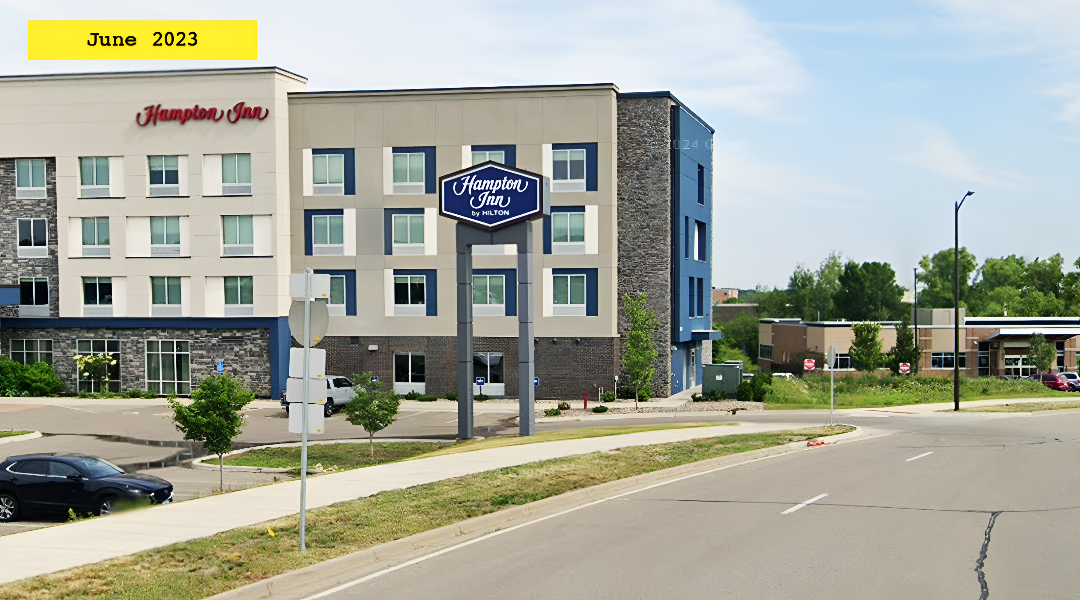
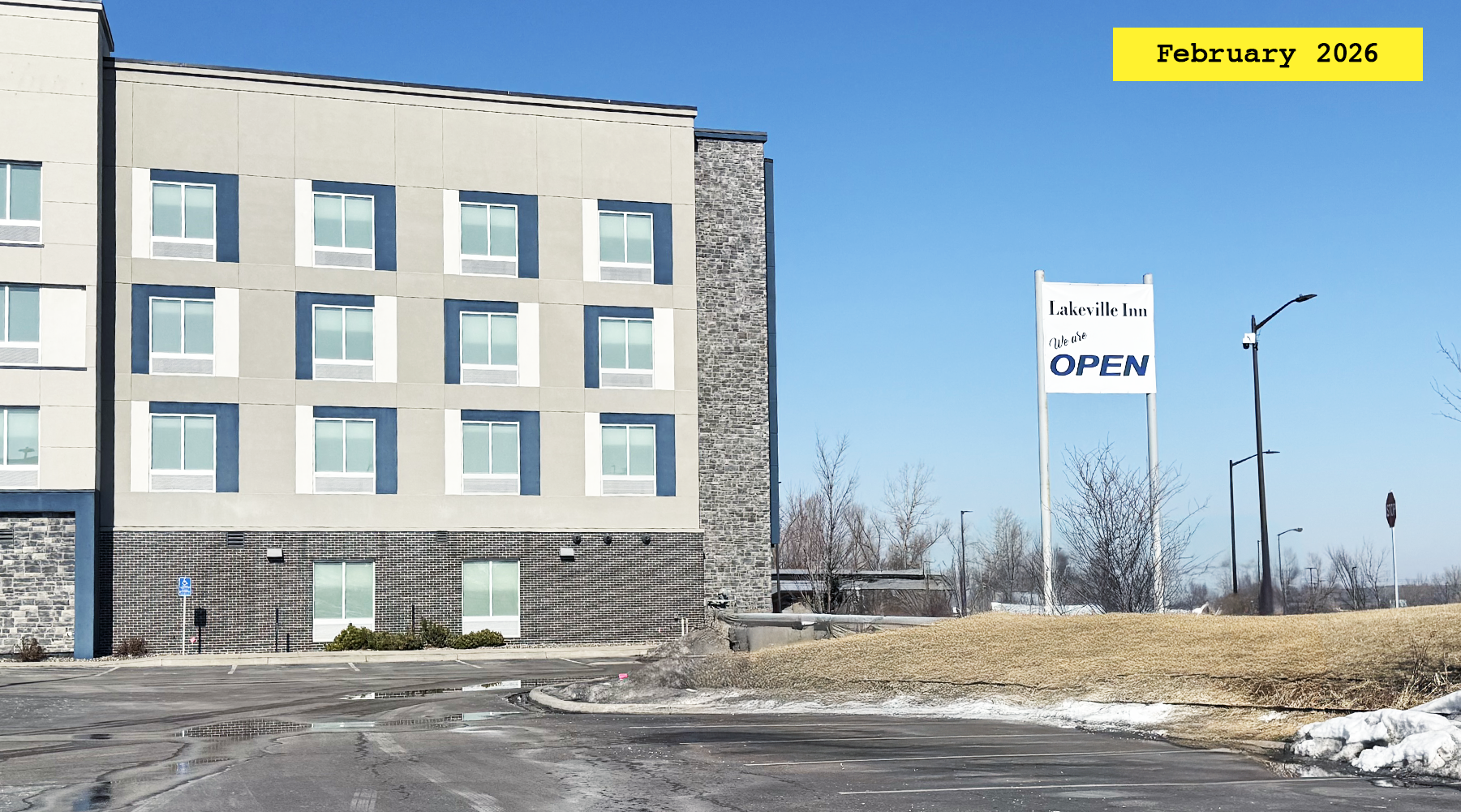
Photo Credit 2: Exterior view of Hampton Inn, Lakeville, Minneapolis. by Sarah Kopit, February 2026
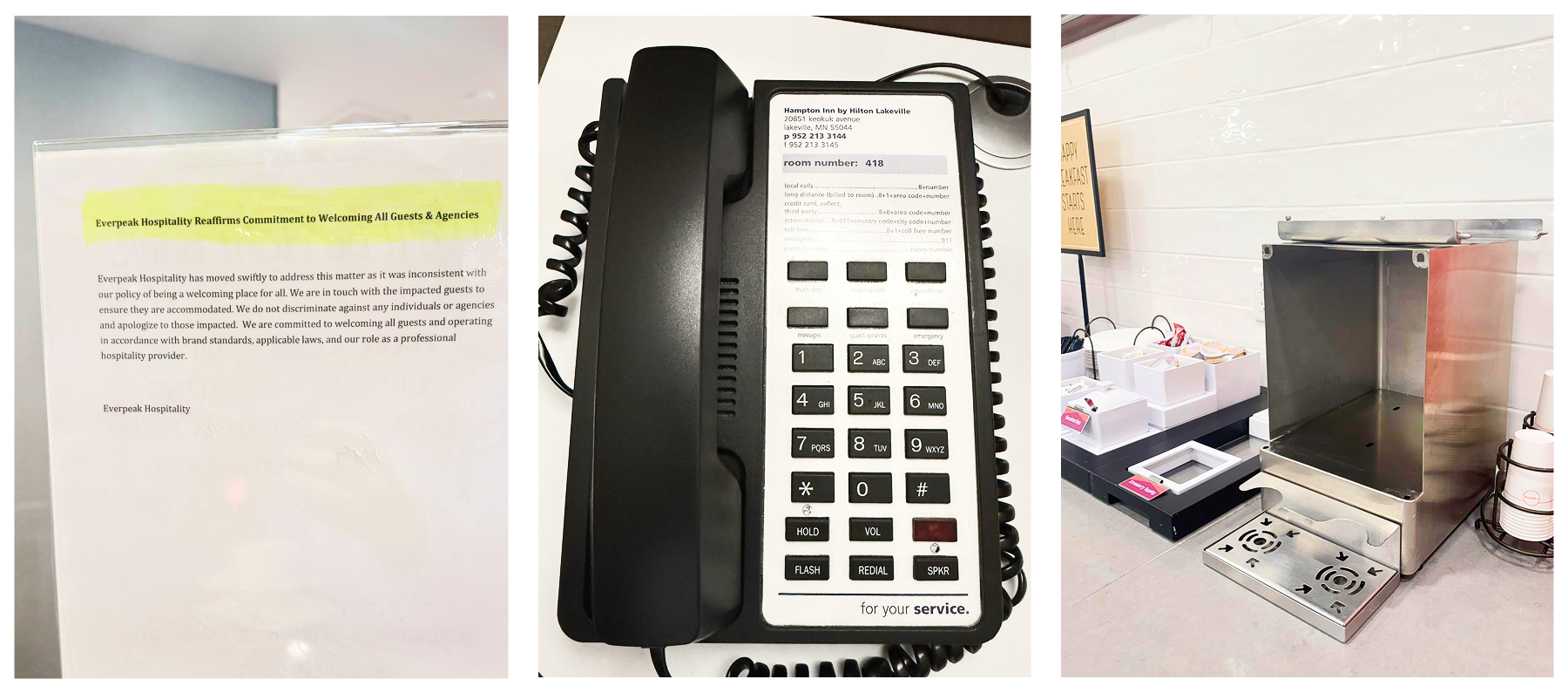
The lobby layout, the breakfast area configuration, the bathroom amenities all still conform to the brand standards Hilton required. The property is immaculate. Pick up the phone in the room and the hardware still says Hampton Inn. So will the reservation confirmation that populates an online calendar.
Everpeak issued a statement shortly after the DHS X post saying it had “moved swiftly to address this matter” and was “committed to welcoming all guests and operating in accordance with brand standards, applicable laws, and our role as a professional hospitality provider.”
The statement did not specify who made the decision to refuse ICE or what exactly was being addressed. But by then it was moot, the franchise agreement was already terminated. A highlighted print-out of that statement currently sits on the front desk. It is Everpeak’s only public statement on the matter. They did not respond to multiple requests for comment on this story.
Braun said Lakeville is now a cautionary tale. “This is an example of something that you have to be concerned about.” But there is no contractual language that resolves the fundamental problem: accepting federal law enforcement bookings puts the workforce at risk; refusing them puts the franchise at risk. The brand can terminate for reputational damage immediately. The workers can quit. The protesters can show up. The boycotts can begin.
So far, the topic of what’s happened in Minneapolis has been something very few in the travel industry have been willing to touch. No brand has acknowledged that the unrest in Minneapolis could repeat in the five cities where similar operations are being planned. But silence is not ignorance. And the properties absorbing the cost of that silence are the ones learning what happens when the framework breaks before anyone is ready to rebuild it.
For the franchisees caught in the middle, the deciding factor may be who shows up tomorrow morning. “I could see owners looking at their employees and saying, ‘I can’t put my employees at risk,'” Braun said. “So I’m gonna stick with the employees because nobody from Hyatt or Marriott is going to come and make the beds.”
