
Q&A: Chalet Hotels Launches Athiva to Capture Growing Indian Travel Market


Photo Credit: Chalet Hotels
Skift Take
Chalet Hotels is betting on India’s domestic travel boom with Athiva, its first homegrown brand. The company aims to offer assurance of the expected and joy of the unexpected to its guests while strengthening its position as one of India’s fastest-rising hospitality players.

This sponsored content was created in collaboration with a Skift partner.
India’s hospitality sector is entering a critical growth phase as a rising middle class, higher disposable incomes, and greater mobility change how people travel across the country. Domestic tourism is expanding beyond major cities and religious sites, bringing new energy to smaller towns, resort areas, and emerging destinations. This rapid growth has exposed a clear gap between what travelers expect and what many hotels currently offer.
SkiftX spoke with Dr. Sanjay Sethi, managing director and CEO of Chalet Hotels, to understand how Chalet Hotels is addressing these market gaps with the launch of Athiva, its first in-house brand focused on today’s more experience-driven and purpose-led Indian traveler.
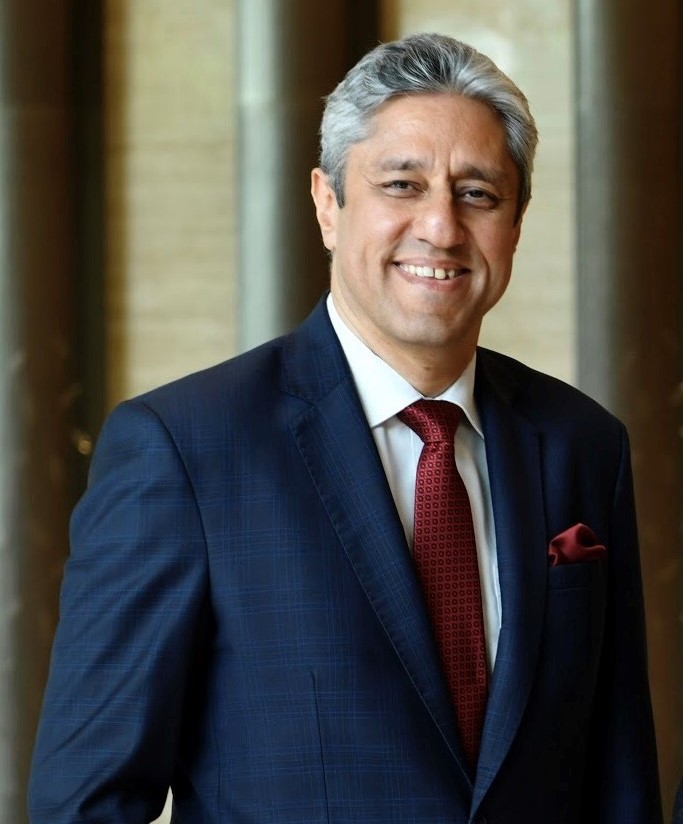
SkiftX: What major shifts have you seen recently in India’s hospitality and travel markets?
Dr. Sanjay Sethi: One of the biggest shifts we’ve seen is the resilience of India’s hospitality sector after COVID-19. The very large middle and upper middle classes decided to spend much more on travel, and guests across age groups began prioritizing experiences and memories over saving for later. However, supply growth stayed weak. The gap between demand and supply created a massive opportunity and pushed prices up, with rates growing at a compound annual rate in the mid-teens over the last four years.
Development challenges still persist. India’s regulatory environment doesn’t rank among the best in terms of ease of doing business, which hinders new supply in many cities. Land scarcity in Mumbai and high real estate costs in major metros have created barriers to entry. As a result, much of the new inventory is coming in tier two, three, and four markets, with smaller average key counts per signing. This demand supply gap creates a favourable arbitrage, which bodes well for the industry in the coming years.
What inspired Chalet Hotels’ decision to launch a homegrown brand, and why now? What gap in the market does Chalet Hotels aim to fill with the new brand?
The launch of a homegrown brand was the culmination of decades of building capabilities. Chalet Hotels has historically owned assets and partnered with global brands. As a result, we’ve developed strong in-house operating and asset-management expertise in sales and marketing, operations, quality, and guest experience. That foundation gave us the confidence to unify several self-managed hotels under one identity, rather than a scattering of individual names. That consistency gives us recognition and a base of loyal guests. It can also serve as a springboard for an asset-light path in the future, if and when we choose to do so.
The market gap is agility. Large international brands often take a long time to localize their offerings to meet Indian travelers’ needs. We saw an opportunity for a young brand that begins at the base of current consumer expectations and reacts quickly because it’s local and Indian. We also believe the brand can create soft value for shareholders and keep us deeply engaged in operations, enabling us to drive performance even when partnering with other brands.
Tell us more about Athiva. What should guests expect when they visit this first hotel under the new brand?
Athiva is intentionally a non-cookie-cutter brand. It adapts to local areas and the products we offer, whether that’s a resort, a business hotel, a meeting venue, or a wedding hotel. The first property we’re launching is the revamped The Duke’s Retreat in Khandala, now called Athiva Resort and Spa, Khandala, a five-decade-old establishment that sits on an irreplaceable viewpoint. We’ve designed the hotel and the brand around three pillars.
Athiva means “abundance” in Sanskrit, so abundant joy is the first pillar. This means giving our teams the freedom to delight guests and solve problems without quibbling over minor details. If a guest asks for something, the answer should be, of course. The second pillar is wellness. Not just a spa or a gym, but peace of mind, movement, and nature. This will entail walking trails with mapped flora and fauna, QR-enabled tree IDs, bird-call audio, and moments of simple joy that can still be wellness.
The third pillar is sustainability, which will be evident in both the message and mechanics. For example, we will place atmospheric water generators along trails, allowing guests to drink “from the air,” and reinforcing the environmental possibilities they can take back to their own lives. Additionally, guests can plant a tree, name it, and return to watch it grow.
How important is sustainability and community engagement to Athiva’s long-term strategy?
Sustainability has been a central component of our strategy for many years. I made public commitments to three global Climate Group initiatives: RE100, which is the pledge to use 100% renewable energy, EP100, which focuses on doubling energy productivity, and EV100, which is the transition to 100% electric vehicles.
We’ve already achieved our EV100 target, we expect to beat our energy productivity goal, and we should reach full renewable energy well ahead of schedule. Chalet Hotels has also been listed on the Dow Jones Sustainability Index for the last four years, with one of the highest scores globally in the Hotels, Resorts and Cruise Lines category, and the highest in India. We’ve committed to net zero carbon emissions by 2040 and are already working on Scope 3, which measures emissions across the entire value chain.
Community engagement is equally important. Two-thirds of our corporate leadership are women, with a 24% gender diversity, which is amongst the best in the industry. We opened The Westin Hyderabad Hitech City in 2023, which is operated entirely by women, with 100% of the roles filled by women, including engineering and security. These commitments to climate, inclusion, and community are at the core of how we build Athiva and how we want our business to grow.
What are your expansion plans for the brand beyond the first property?
We manage a seafront resort near Mumbai with 94 rooms, which we don’t own. There’s a proposal to expand it by approximately 150 rooms, bringing the total to approximately 250 keys. It’s a beautiful beachfront location with excellent connectivity, thanks to the new coastal road and bridge, and it’s likely to carry the Athiva flag by early next year. We also have a business hotel under major renovation to reposition it as an upper upscale Athiva, with modern and communal spaces. Beyond that, we’ve acquired two land parcels in Goa and hold a 44-acre site in Thiruvananthapuram, where we plan to build a convention centre hotel along with wellness offerings.
How do you see Chalet Hotels evolving over the next five to ten years?
We were a small company a few years ago, but are now among the largest listed hotel companies in India. With just 11 hotels, this is a testament to the quality of assets and management we have. This success stems from selecting the right locations, developing strong products, assembling capable teams, and collaborating with the right partners. Chalet Hotels has transitioned to one of the strongest hospitality players within the travel community in a remarkably short period. The launch of Athiva Hotels & Resorts is the next step in strengthening our position.
Learn more about Athiva and Chalet Hotels.
This content was created collaboratively by Chalet Hotels and Skift’s branded content studio, SkiftX.
