
Interview: SpiceJet Founder’s Big Ambitions for Indian Aviation
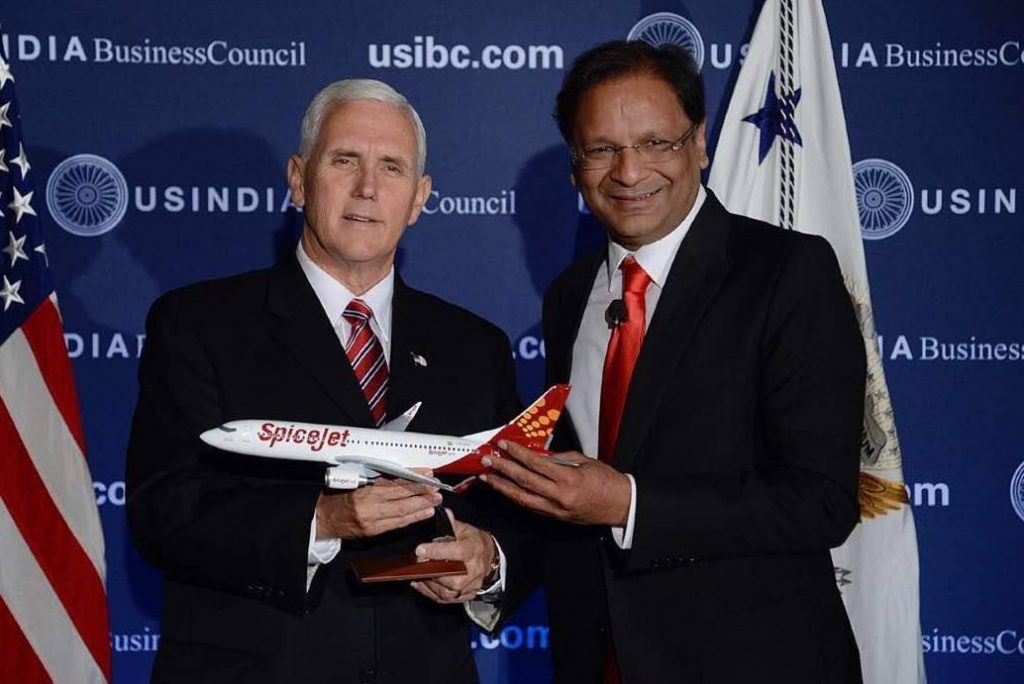
Photo Credit: Founder Ajay Singh (right) presented a SpiceJet Boeing 737 model in June 2017 to U.S. Vice President Mike Pence to celebrate the airline's big deal with the American manufacturer. Earlier, President Trump had mentioned SpiceJet's large Boeing order to the press while meeting with Indian Prime Minister Narendra Modi. SpiceJet
Skift Take
Unless you're obsessed with aviation, you probably don't know SpiceJet. But you might someday. India is a fast-growing aviation market, and SpiceJet has nearly 200 Boeing 737s on order. Someday, it might even fly long-haul jets to London or beyond.
Future of Passenger Experience
To better understand the challenges facing airlines in an age of fluctuating oil prices, rapid growth, and changing passenger expectations, our Future of Passenger Experience series will allow leaders in the industry to explain their best practices and insights.Less than three years ago, SpiceJet, India's fourth-largest airline by marketshare, was close to shutting down. It couldn't pay its bills, and it owed significant money to airplane lessors, fuel companies and caterers. Things got so bad that by December 2014, SpiceJet's planes didn't carry food or water for passengers.
Like most other airlines in its predicament, SpiceJet seemed certain to cease flying. It happened in 2012 to Kingfisher Airlines, a promising but poorly run Indian carrier that folded after seven years. The market was there, but Kingfisher couldn't capitalize on it.
But SpiceJet had a savior in Ajay Singh, an entrepreneur who had helped start SpiceJet in 2005 after acquiring assets from a failing airline called ModiLuft. Singh turned SpiceJet into a small yet profitable low-cost airline business, before selling his stake in 2010.
Later, Singh watched the company languish under controlling owner Kalanithi Maran, a media tycoon, and S

