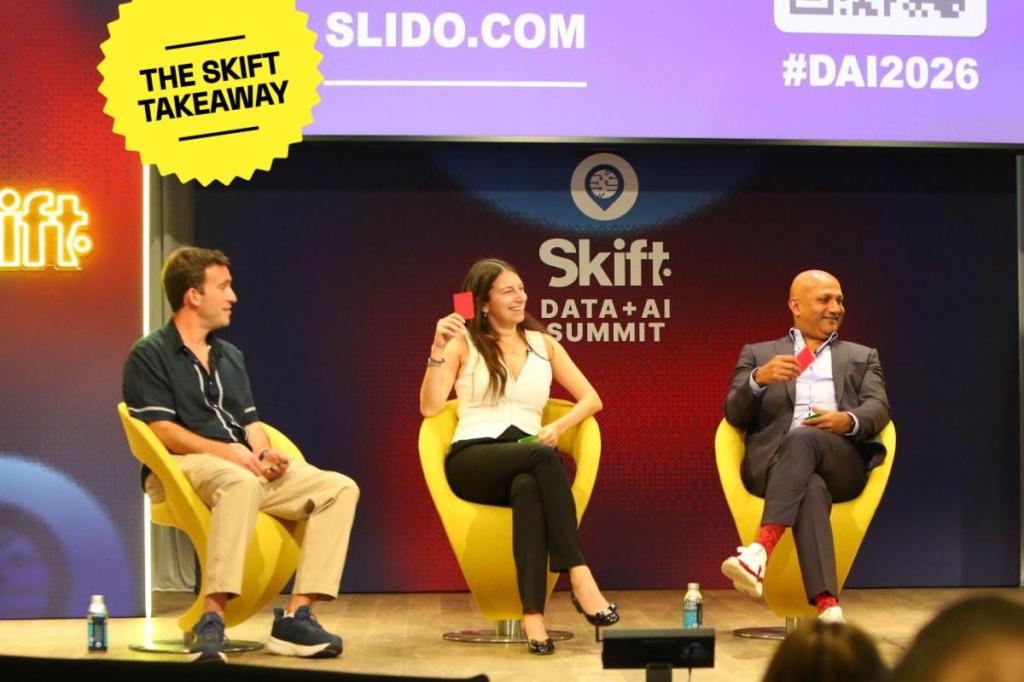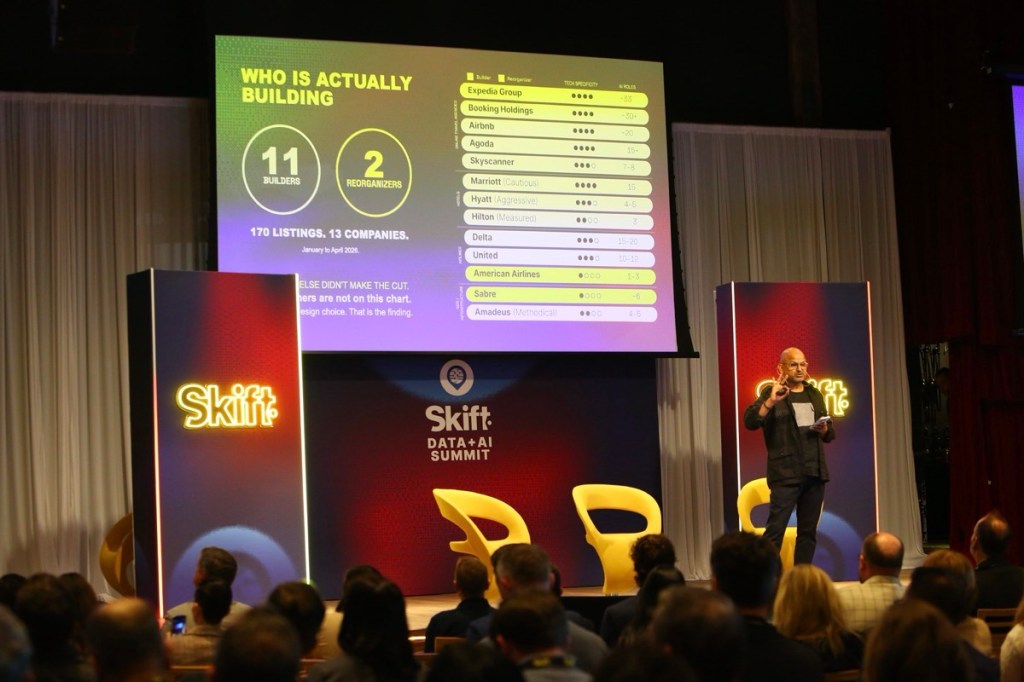
Travel is the only major industry getting hit from both directions at once: AI search volumes are exploding without converting while total AI token bills internally are rising.
AI can't sell what hotel systems can't see. Until room-level data, guest behavior, and service pricing live in one connected system, the industry's AI gains will stay stuck on the cost efficiency side of the ledger.
If your AI investment is being justified internally as labor savings, this session argued you're underselling the revenue case and overselling what's possible.
If your organization is still waiting for agents to mature before committing to a production deployment, the waiting period is already costing competitive ground.
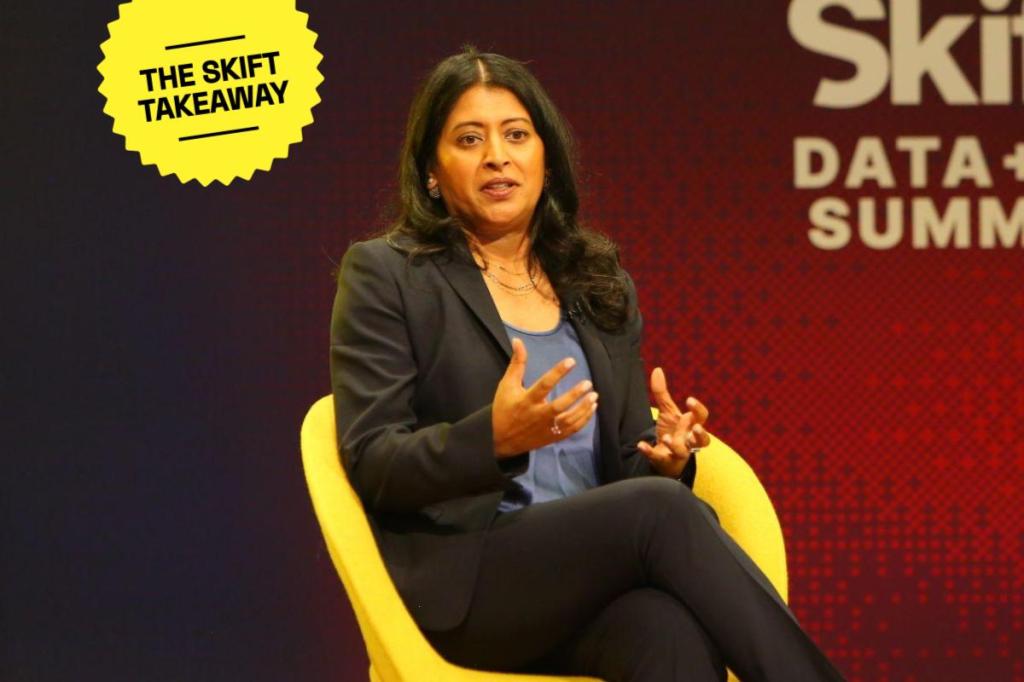
If you're setting your AI roadmap around build versus partner or buy, Ranganathan's framework suggests a major issue is whether the capability touches customer data and trust.
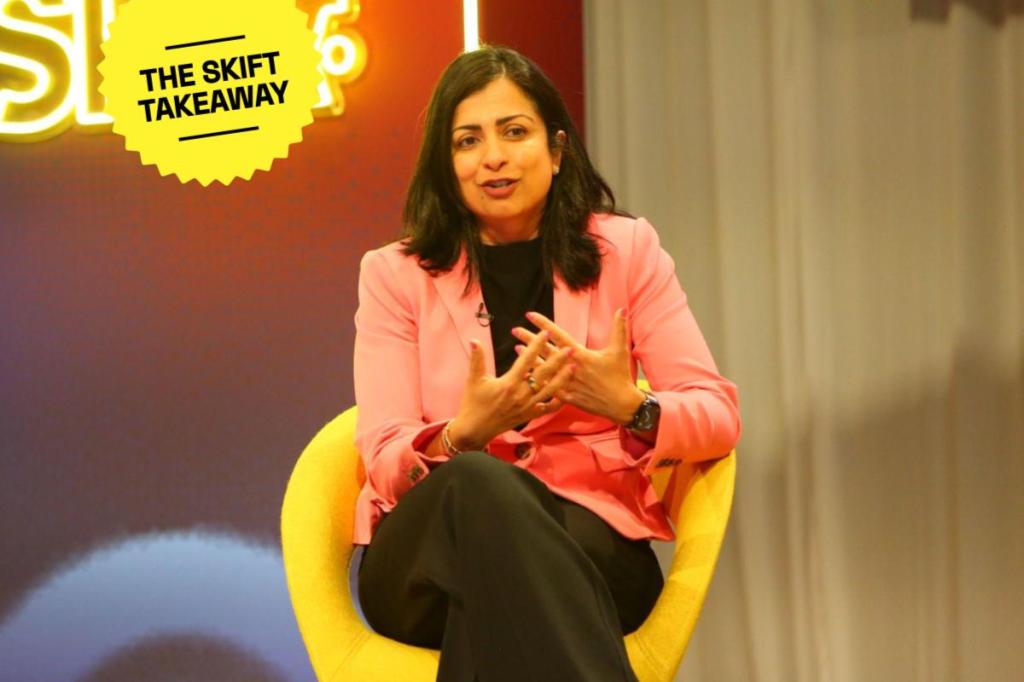
Priceline's transparency play — show users their data, let them correct it — is a direct answer to the trust problem that has slowed AI adoption in consumer travel.
If you are pitching travel AI to investors, lead with cost savings you can put on the income statement, not revenue lift you can only promise — measurability is what closes the deal.
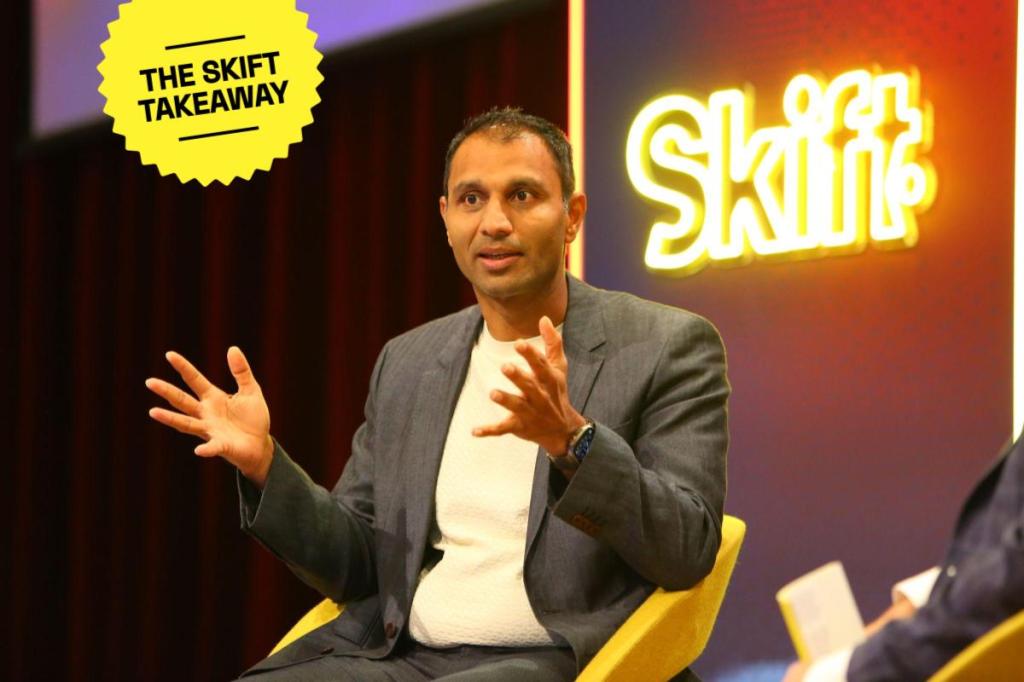
AI has gotten remarkably good at helping travelers decide where to go. The harder problem is getting them to book. Travelport's Fahim Khan argued that as more travelers start with LLMs, pricing and transaction capabilities will need to move higher up the funnel.