
6 Facts About Air India’s Transformation – and What’s at Stake After the Crash

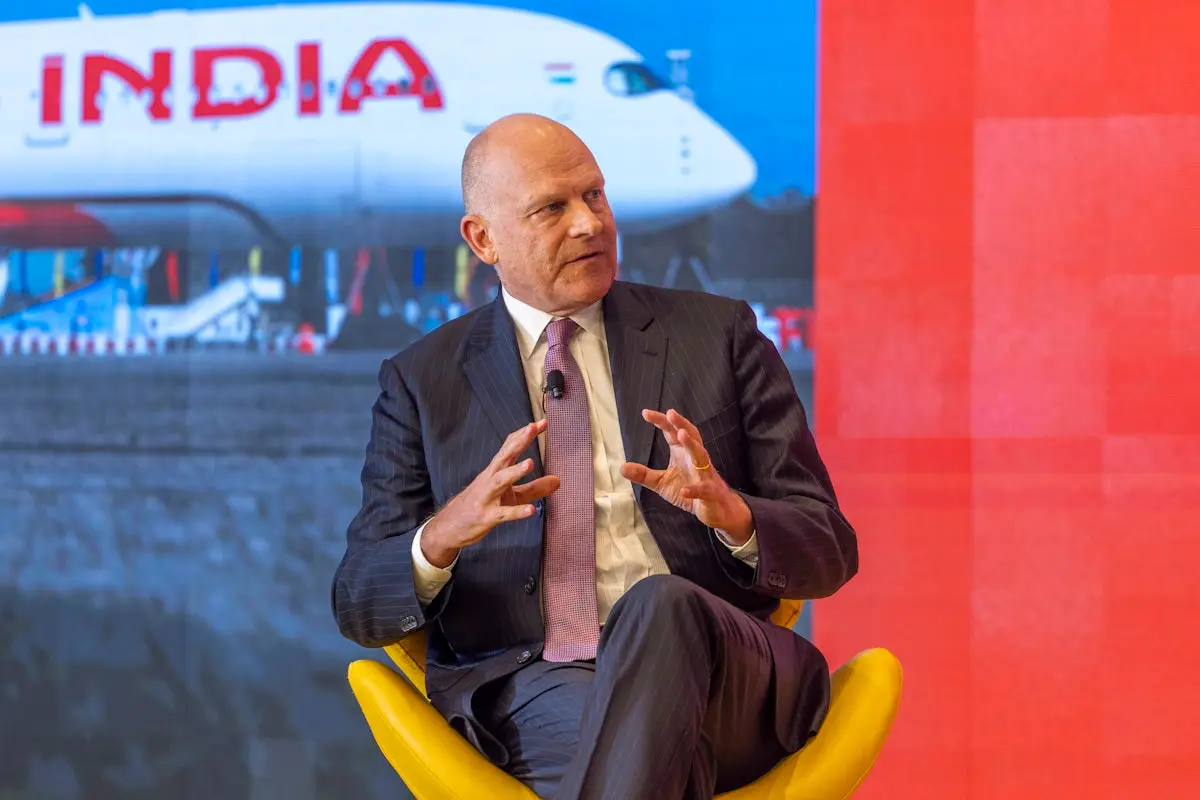
Photo Credit: Air India CEO Campbell Wilson speaking at Skift Forum India on March 18, 2025. Skift
Skift Take
Air India is in the middle of a major transformation after decades of losses. Now it faces a new challenge.

Air India Liveblog
Ongoing coverage of the crash of Air India flight 171 from Skift’s editorial team in India, Europe, and the United States.Skift’s coverage of the Air India crash is offered free to all readers.
Air India, having recently emerged from decades of financial and operational upheaval, now faces an intensely sobering moment. These six points explain the airline’s recent transformation — and the shadow cast by today’s disaster.
1: From Government Loss-Maker to Private Rebirth
The airline was a deeply loss-making government entity for decades before 2022, when it was sold to the Tata Group, a large Indian conglomerate.
2: Singapore Airlines Enters the Picture
As part of the Air India privatization, Singapore Airlines purchased a 25% ownership stake. The latter was for many years eager to expand its footprint in the large and high-potential Indian aviation market.
3: Consolidation Creates a Unified Network
The privatization, importantly, coincided with a move to consolidate India’s airline sector. Air India merged with Vistara, a young airline backed by Singapore Airlines.
At the same time, Air India’s low-cost subsidiary Air India Express merged with a smaller low-cost carrier backed by Malaysia’s AirAsia Group.
4: One of the Global Leaders in Aircraft Orders
Today’s enlarged Air India is one of the world’s largest airline customers for commercial jet aircraft.
According to the aviation data company Cirium, it currently has 516 planes on firm order, roughly two-thirds of them with Airbus and the other third with Boeing. Twenty of those 516 units are Boeing Dreamliners, specifically the -9 version. (The Dreamliner is a common name for Boeing B787 model).
The plane that crashed was a smaller -8 version. Air India’s active fleet as of yesterday consisted of 27 B787-8s and seven B787-9s, of 305 planes in total.
5: Ambitious Growth Tempered by Delivery Delays
The fact that Air India has a fleet of about 300 planes but an order book for about 500 planes highlights its ambitious growth plans.
Its growth, however, has been slowed by aircraft delivery delays and engine issues. The airline has 5% more seats scheduled this quarter than the same quarter last year.
6: India’s Exclusive Overseas Airline – Until Now
Air India is currently the only Indian airline serving overseas markets like North America and western Europe. That’s because until recently, it was the only Indian airline with a fleet of long-range twin-aisle aircraft like the B787.
That’s changing as rival IndiGo likewise plots a worldwide growth campaign. Both carriers hope to capitalize on India’s rapid economic growth, eager to take a greater share of the Indian traffic now dominated by Middle Eastern Gulf carriers like Emirates and Qatar Airways.
