
Hilton Tests Redesigns to Update 106-Year-Old Flagship Brand: Exclusive


Photo Credit: Exterior view of the new Hilton Turin Centre. Hilton
Skift Take
The Hilton flagship brand's "three C's" strategy (celebrations, connections, and culture) reads like corporate speak. But it addresses a real challenge. Differentiating 615 full-service hotels in an increasingly crowded segment is no picnic.

The 106-year-old Hilton flagship brand wants to morph its legacy image, with local partnerships, better storytelling, and redesigned aesthetics. The challenge: pleasing both TikTok-using travelers and cost-conscious hotel owners.
In an exclusive interview, Leonard Gooz, brand leader, outlined some of the moves. The company is trying out its new ideas at the 36-story Hilton Arlington Rosslyn The Key, which will soft-open on Tuesday with 331 rooms.
The hotel, with its warm woods, ample natural light, and blue rugs evoking the nearby Potomac River, represents what Gooz hopes will become one of a few inspirational templates for opening 171 new Hiltons and gradually updating 612 existing ones worldwide. The property is even the first to showcase the brand’s revamped logo.

Applying New Thinking
At the new hotel, the front desk sits in the middle of the lobby rather than against a wall. Staff can offer arriving guests coffee or tea in the adjacent seating area.
Rather than inventing and running food-and-beverage in-house, the hotel’s owner-operator, Dittmar Company, has a partnership with Metropolitan Hospitality Group, the local operator behind popular area restaurants like Circa and Salt.
Food and beverage remains “the toughest nut to crack,” according to Gooz.

Finetuning the Hilton Brand
Gooz contrasts the Hilton finetuning with his years of leading the Home2 Suites brand, where lobbies functioned as living rooms and guests felt comfortable grabbing snacks in sweatpants.
“When I took the helm of Hilton, I said that running Home2 was like riding a jet ski and that this was like boarding Queen Mary – beautiful but complicated,” Gooz said.
Under his leadership, Home2 Suites became the top-rated brand in guest experience relative to its competitive set. It was and remains the most popular brand in Hilton’s U.S. hotel construction pipeline.
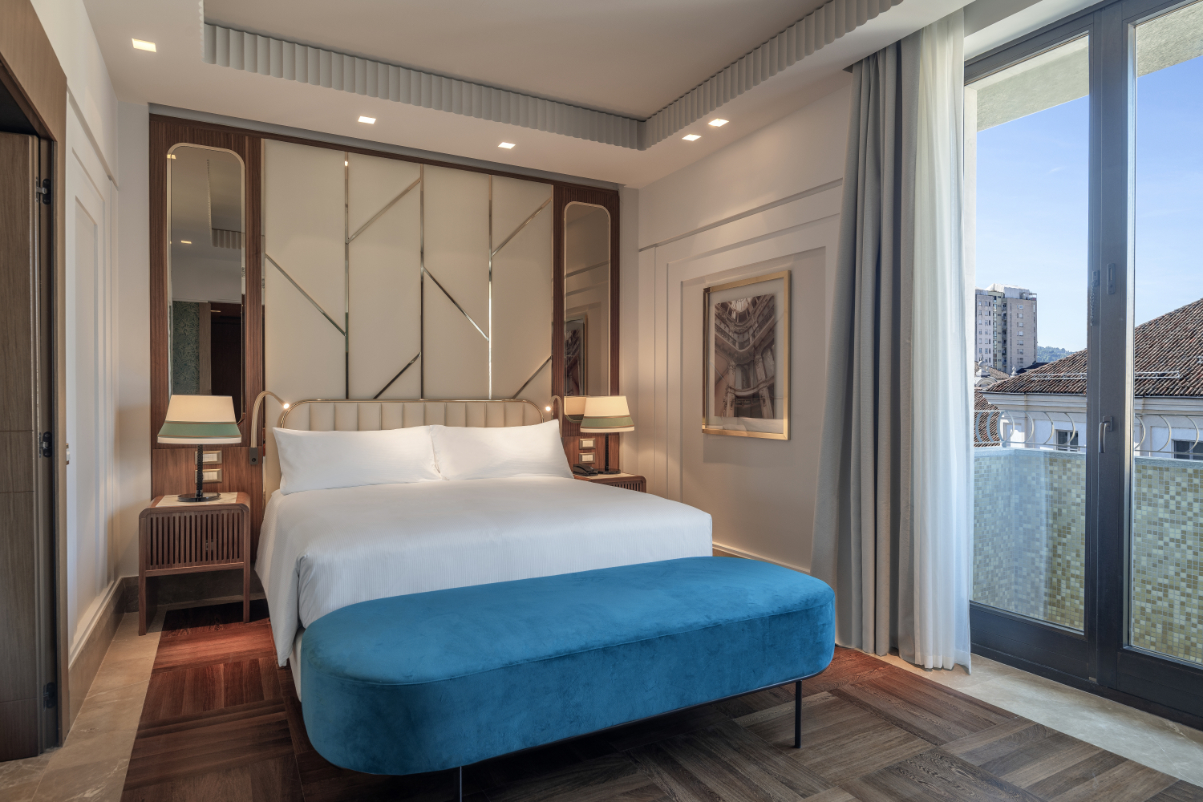
His extended-stay experience taught him that wellness isn’t just about gyms and spas. It’s also about fundamental comfort, and business travelers need quality sleep above all.
“I’m very keen on making sure every room is serene,” he added, emphasizing the importance of temperature control, darkness levels, and sound management.
This led to Hilton brand-wide decisions like making bedside alarm clocks optional to avoid disruptive digital screens. At the Arlington property, the operator has dispensed with irons and ironing boards in guest rooms and replaced them with handheld steamers.
Each amenity, even bathroom amenities and shower fixtures, faces “3 or 4 different ways of testing,” including blind consumer testing, packaging evaluation, and pricing analysis.
“The 3 C’s”
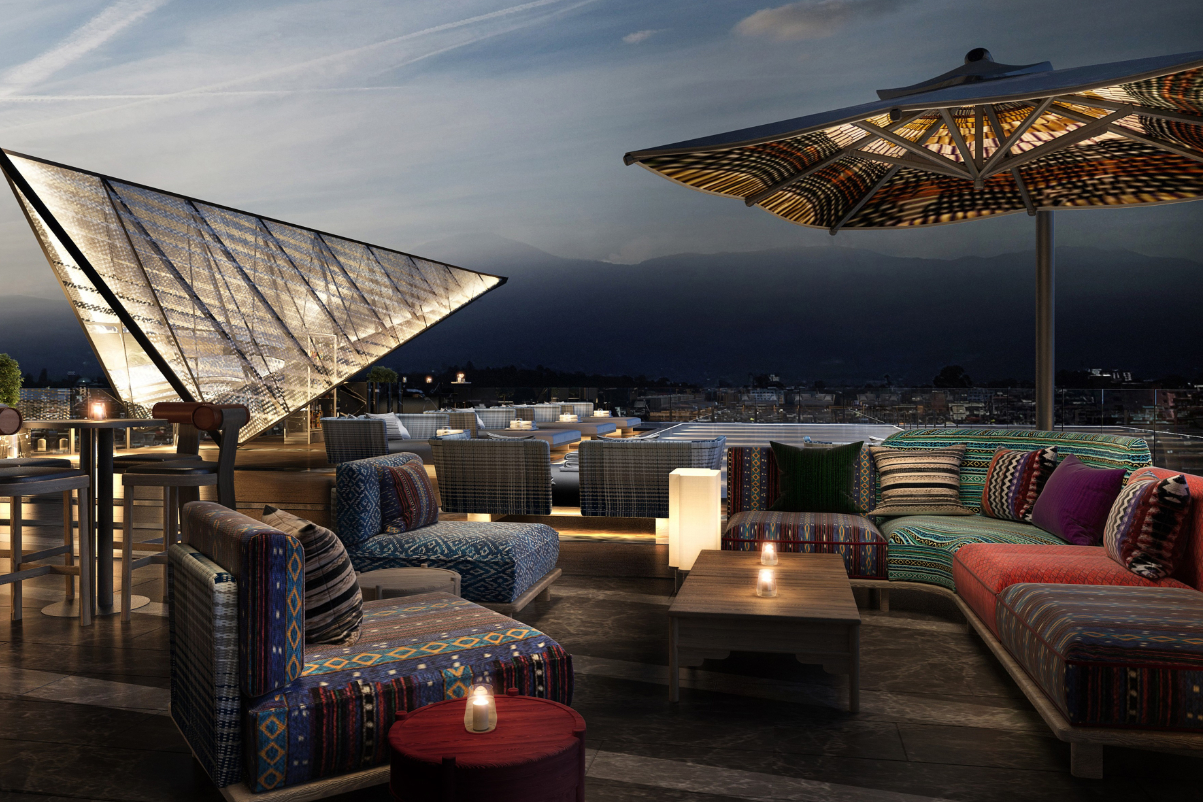
Gooz said the Hilton brand is now being anchored to what he called the “three C’s”: celebrations, connections, and culture. Translation: Hilton wants its lobbies to feel less like transit zones for business travelers and more like places where people might actually want to spend time.
“Upon arrival at a Hilton, with the lighting, the energy, the music, the cocktails, we want to make sure every single guest feels like they are the center of it all,” Gooz said. “If you come in on Friday at 8 p.m., it’s got to feel activated.”
Facing Rivals
Hilton’s repositioning comes as the flagship brand faces an ever-more crowded field.
CoStar classifies the brand as “upper upscale,” a segment where rivals have already claimed the design-forward territory. IHG operates Kimpton and Hotel Indigo. Accor has 25hours. Hyatt runs Centric and Regency. Hard Rock and Ace Hotels also compete. Each promises something similar: hotels that don’t feel like hotels.
“I see a lot of new developments that are beautiful, sophisticated, but on the colder side,” Gooz said. “How do we add a little bit of warmth to represent the spirit of hospitality?”
“There’s this genuine thirst among our travelers for a safe landing zone, like a friend they can trust,” Gooz said. “Once they’re there, they become a little bit more open and free to explore.”
The Hilton corporation itself has expanded from 8 brands to about 20 over roughly a decade. Embassy Suites and Graduate Hotels compete in the same upper-upscale category as the flagship brand.
“Every time that we create a new brand, we identify a problem and find the white space here that we’re not filling with one of our brands,” said Larry Traxler, SVP of global design for Hilton. “We make sure that there’s a clear swim lane for that brand, and that we’re not cannibalizing the brands on either side.”
Whether those swim lanes remain distinct is another question. The company doesn’t publicize specific performance metrics for the flagship brand compared to its siblings or competitors.
The Owner Challenge
Instead of identical boxes from Tokyo to Toledo, each property uses local restaurant partnerships, regional artwork, or design cues that reflect the location. “Every hotel needs to tell its story,” Gooz said.
Yet the brand simultaneously insists on maintaining its identity. “One of the litmus tests we use is, if we remove the logo, can you still tell you’re in a Hilton?” Gooz said.
This balancing act between local authenticity and brand consistency creates obvious tensions. Hotel owners typically prefer standardization to keep costs down. Custom design elements and local partnerships cost more than bulk-ordered furniture and centralized supply chains.
The flagship Hilton brand has the tricky burden of balancing the traditional expectations of long-time loyalists with contemporary tastes and trends. It’s especially true at over 100 U.S. properties undergoing renovations.
Gooz emphasized that successful execution requires significant “sweat equity” from both brands and developers.
“Every project wants to be value-engineered to death,” Gooz noted, referring to how owners may want to substitute cheaper materials and paint as much as possible. “But you cannot value-engineer it down to the most common denominator. You need to create that distinction.”
Accommodations Sector Stock Index Performance Year-to-Date
What am I looking at? The performance of hotels and short-term rental sector stocks within the ST200. The index includes companies publicly traded across global markets, including international and regional hotel brands, hotel REITs, hotel management companies, alternative accommodations, and timeshares.
The Skift Travel 200 (ST200) combines the financial performance of nearly 200 travel companies worth more than a trillion dollars into a single number. See more hotels and short-term rental financial sector performance.
