
Travel Brands and Meeting Planners Are Using Virtual Reality to Drive Conversion
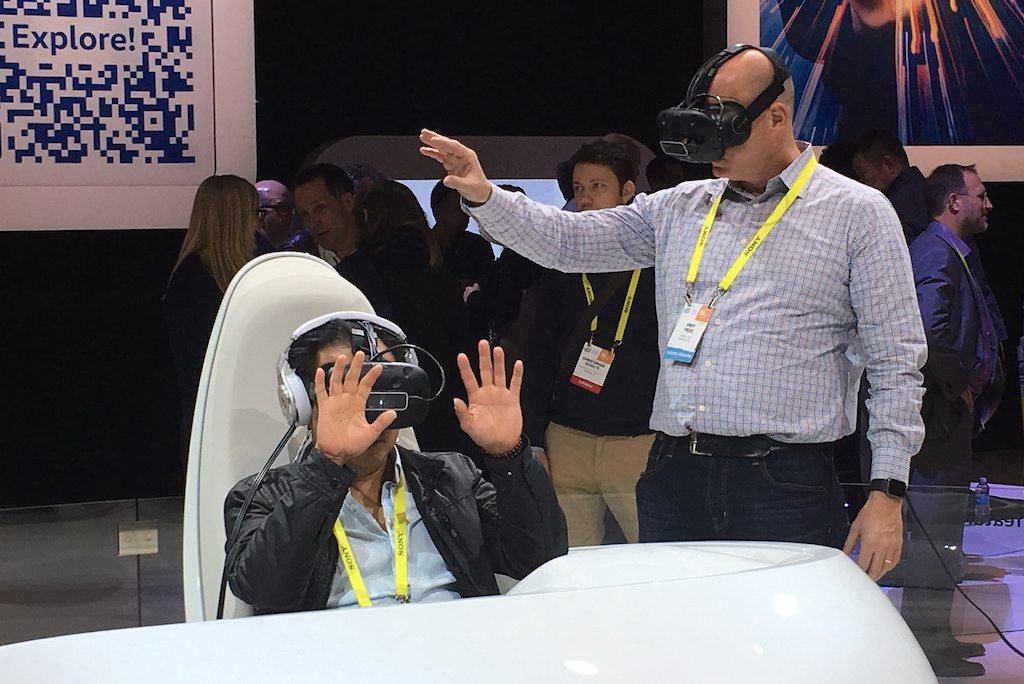
Photo Credit: Brands like Volkswagen, here at CES 2017, are integrating increasingly sophisticated virtual reality tech into their event experiences. Skift
Skift Take
Virtual reality is finally going mainstream in 2017. Travel brands and event planners are leveraging that demand to engage their audiences in more impactful ways, which is proving to drive higher conversion rates.
Tim Baxter, president of Samsung Electronics America, announced at the CES 2017 technology show in Las Vegas last month that the company topped five million sales of its $100 Samsung Gear virtual reality (VR) headsets since launching them 13 months ago.
Also at CES, Intel CEO Brian Krzanich held his company's press conference in virtual reality with 260 media wearing Oculus Rift headsets.
VR is moving into the mainstream consumer mindset in 2017, and travel brands are leveraging that to engage them in new ways using 3D immersive technology. Brands are also discovering the power of VR to drive higher conversion rates.
"Virtual reality is changing the game for a variety of industries including health care, agriculture, manufacturing, and business," said Gary Shapiro, president and CEO of the Consumer Technology Association, which produces CES, in a Reddit chat. "Doctors are using VR to enhance traditional therapies, architects use VR to design stronger buildings, and travel

