
Airbus Wants Airlines to Radically Rethink the Passenger Experience
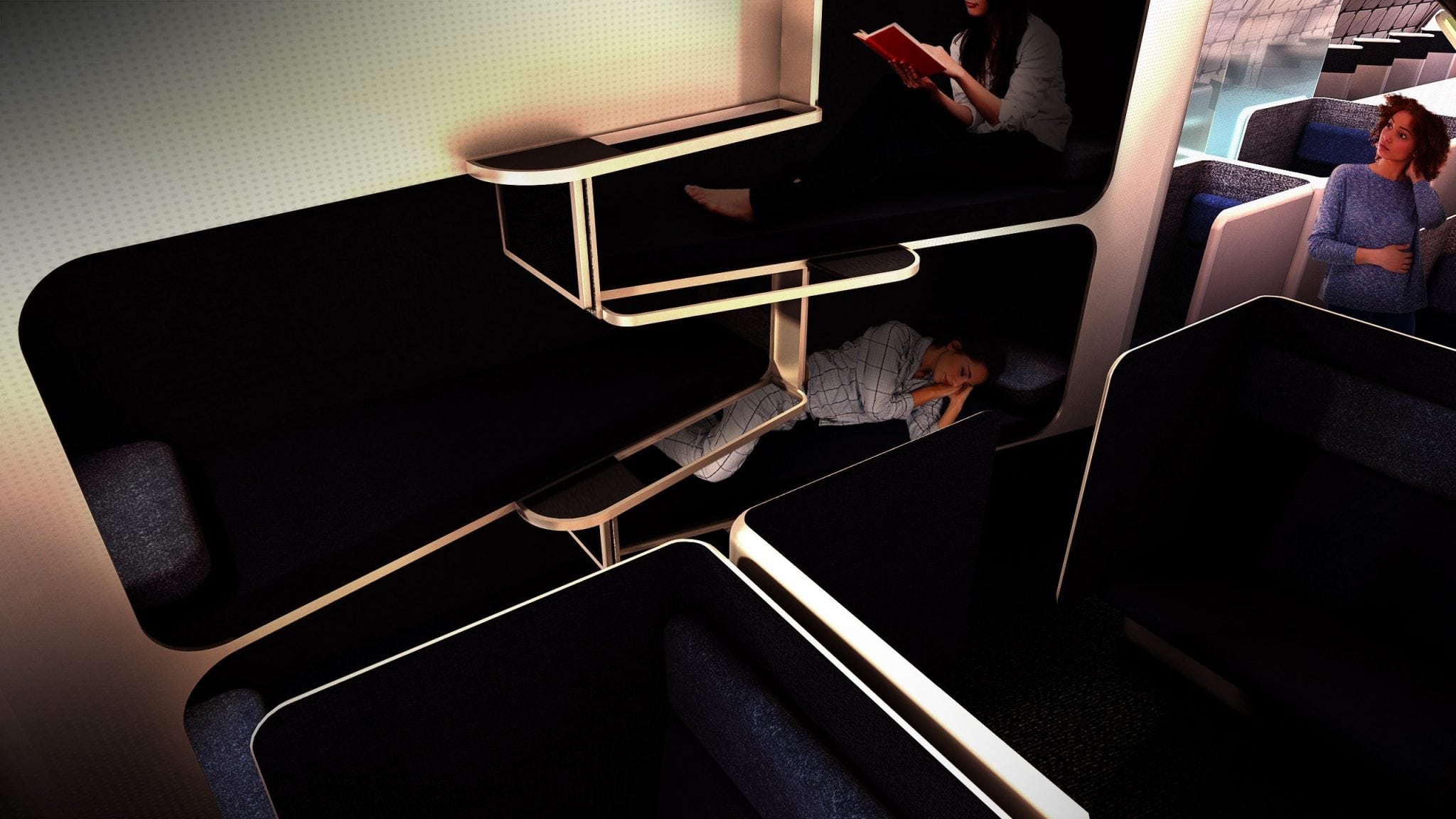
Photo Credit: If Airbus can make modular cabins possible, an airline might be able to install sleeping pods on some longer flights, and remove them for shorter ones. Airbus
Skift Take
The basic aircraft cabin has not changed in decades. Airbus wants to give airlines flexibility to innovate, and that's impressive. But let's be honest. It is unlikely carriers will ever adopt Airbus' new platform. And if they do, it's even less likely they use the new functionality to install coffee shops or onboard gyms.
When it comes to innovation, the world's airlines rarely demand massive change from aircraft manufacturers.
Having watched Concorde fizzle in the early 2000s, carriers generally don't want planes that can fly faster. Many don't even want aircraft that can fly farther, calculating there's no reason to buy an airplane capable of flying 18 hours if it only flies between New York and London. And for passenger amenities, most carriers don't want on-board bars or showers, either.
Instead, their needs usually are basic, practical, and driven by finances. They want planes that will carry as many people and as much cargo as possible, while burning less fuel than previous-generation aircraft. Rival Boeing's 787 is a commericial success not because it's slightly more comfortable for passengers — Boeing designed it to limit jet-lag – but because it's far more fuel efficient than older aircraft it replaces. The 787 can turn once marginal routes into moneymakers, even accounting for the

