The Skift Data and AI Summit returns to New York City on June 3, 2026, bringing together travel industry leaders, technology innovators, and data experts to explore how artificial intelligence is reshaping the business of travel.
Sierra's Pol Peiffer argues the interface layer of travel is shifting from forms to conversation. The companies still optimizing dropdowns are building on top of an architecture customers are about to leave behind.
The competitive variable in travel AI isn't model sophistication. It's whether customers trust the product enough to let it act on their behalf — and most companies are still investing in the wrong layer.
Hotel CEOs are signing AI contracts this quarter that will define their technology stack through 2030, and most procurement teams are evaluating these deals the wrong way — tool by tool, use case by use case, without asking whether the underlying data architecture allows those tools to compound or whether each one starts from zero.
Adam Harris is drawing a line between the AI that wins demos and the AI that runs a hotel at 2 a.m. without triggering a chargeback. For operators staring down agent-on-agent commerce, that distinction is the whole game — and most of what's being committed to this year is on the wrong side of it.
Mia Morisset knows which travel AI bets will hold: yield optimization, corporate travel reinvention, and distribution moats built on data. She is equally clear on where capital is leaking. Both arguments are worth hearing before the market makes them for you.
Evolve has spent two years rebuilding its stack to make AI investments traceable directly to the P&L. Arun Nagarajan isn't theorizing about what AI could do for travel operations.
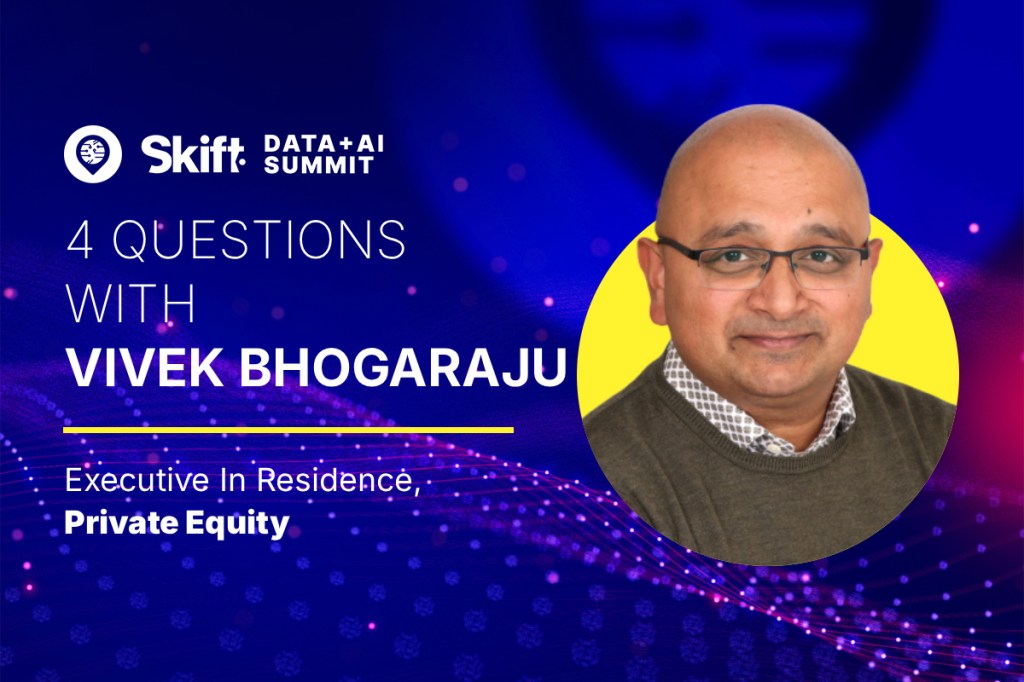
Vivek Bhogaraju doesn’t follow AI hype. He tracks where capital moves, and right now it’s flowing toward agentic AI that is starting to dismantle legacy hospitality tech.
Most AI strategies in hospitality break long before deployment. The issue sits upstream in data structure and operating design. Richard Valtr cuts through the noise and points to what actually determines results.