
Meetings and Events Technology Alone Can’t Solve Accessibility Challenges
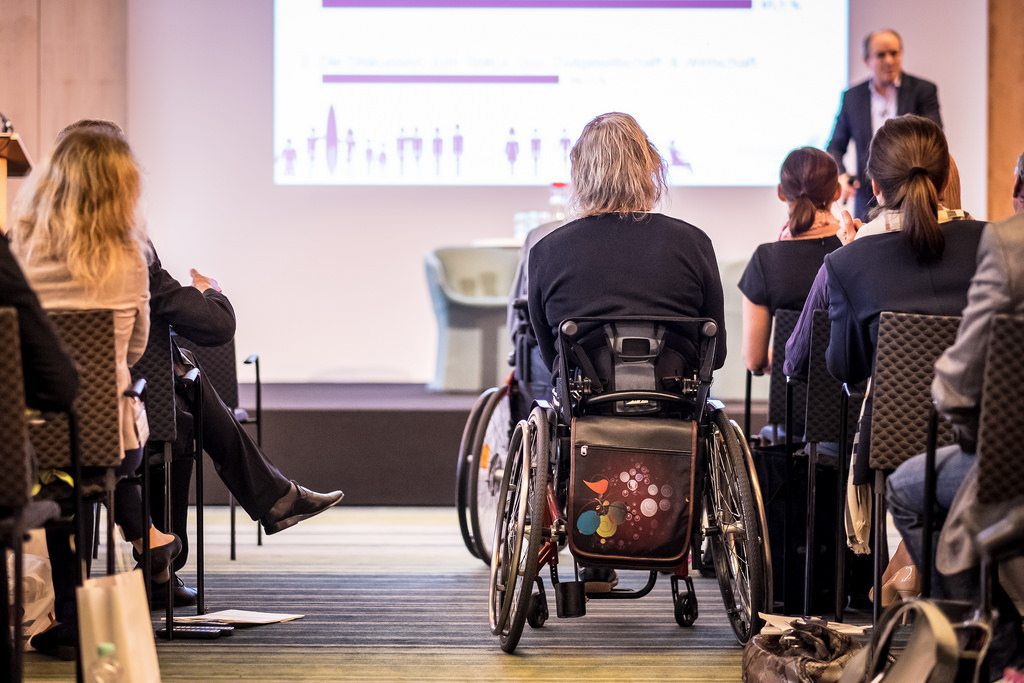
Photo Credit: A 2014 event in Germany attended by at least several disabled people. Flickr / SozialHelden
Skift Take
People with disabilities are often overlooked by event spaces and meeting planners. A new wave of innovation and technology can help make meetings and events more accessible, but lasting change needs to start with a focus on increasing accessibility during the planning process.
Hospitality professionals are well-versed on the various components that make up a great meeting, conference, or event. These can include a thoughtful keynote speaker, a well thought-out menu, or a one-of-a-kind interactive experience, along with pervasive Wi-Fi access and copious meeting areas.
But what about event accessibility and inclusiveness?
There were nearly 40 million Americans living with a disability in 2015, making up 12.6 percent of the total population, according to the U.S. Census Bureau, which defines disability as a spectrum of “limitations of activities and restrictions to full participation at school, at work, at home, or in the community.” These can be hearing or vision difficulty, cognitive difficulty, ambulatory difficulty, self-care, or independent-living difficulty.
People with disabilities are also active members of the workforce with approximately 21 percent employed, according to the Department of Labor Office of Disability Employment Policy.

