

JetBlue to end Burlington-Orlando nonstop: Few care, but it tells a story

Skift Take

Expect reduced service and competition on a couple of dozen major routes and for regional and smaller airports when American Airlines emerges from bankruptcy and inevitably merges with US Airways or another airline.

-Dennis Schaal

There will be no Congressional hearings, airline boycotts or much fuss now that JetBlue brass met with Vermont officials and confirmed that the airline plans to end in late November its only nonstop flight from Burlington Airport to Orlando.

JetBlue, which had operated the flight for several years, will continue to fly from Burlington to New York City airports, and from there customers can catch connecting flights to Orlando and under-served Florida airports.
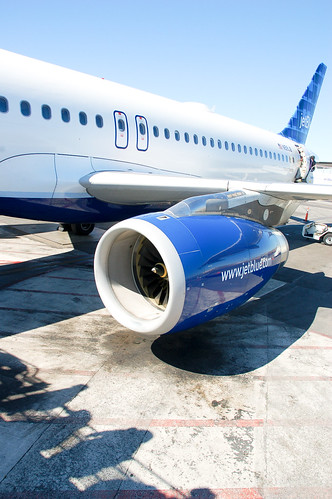
JetBlue plane

JetBlue plane at gate. Photo by Rich Moffit.

The Burlington Airport’s interim director admits the nonstop flights were popular, but JetBlue didn’t see the consistent numbers it sought, according to a Boston.com story.

Sound familiar?

In recent years, the Burlington-Orlando story has been repeated untold times as major and minor carriers have cut service to regional or smaller airports.

As a traveler, you just can’t get from here to there anymore — at least not conveniently.

And, the situation will only get worse with the next big airline consolidation scenario — American Airlines with US Airways or whomever the dance partner ends up being.

For example, the recent American Antitrust Institute-Business Travel Coalition white paper on a potential tie-up between American and US Airways suggests overlapping service on 22 routes would lead to capacity reductions at hubs, and would have a ripple effect.

Delta did it, too

And, given the track record from the Delta-Northwest merger, such consolidation fever would be bad news for smaller airports, communities and travelers trying to get there.

“It is worthwhile noting that while our analysis does not include behind-the-hub airports, a highly probable result of capacity adjustments at hubs is the degradation of service to behind-the-hub communities, which includes small and medium-size cities,” the white paper states. “Moreover, empirical work supports the notion that consolidation leads to consumer welfare losses involving small airports, with evidence from the Delta-Northwest merger.”

Such is the undeniable trend in this era of airline mergers and deregulation as passengers from airports large and small have to cope with higher fares, reduced airline capacity, and fewer options in finding flights that don’t include stopovers and do feature lots of downtime.


  • Henry Harteveldt

    Dennis, the AAI-BTC report has some of its facts wrong re: the number of shared nonstops between American Airlines and US Airways. There are 12 shared nonstop routes, not 22 (the report double-counts routes — e.g., Charlotte-DFW is counted as both Charlotte-DFW and DFW-Charlotte). Ten of those 12 have competition – some, like PHX-LAX, have multiple airlines competing on them. What’s more, there are 31 US Airways cities that can be added from AA hubs, and 56 AA cities that can be added from US Airways hubs.

    Airplanes are expensive and have to be paid for. Airlines are businesses. Business are suposed to earn profits. In the airline business, those profits are earned by flying those expensive airplanes in patterns and between the cities where the profit potential is greatest.

    Airlines like Frontier, Spirit, and Allegiant have been aggressive about adding nonstops to secondary cities where they believe they can make money. Frontier, for example, recently announced it would fly twice a week between Trenton, NJ and Orlando. As it progresses through its merger with AirTran, who knows if Southwest will choose to open Burlington as a destination?

    Though I’m sure the people in Burlington, VT may not be pleased about losing their nonstop to Orlando, JetBlue is making a smart business decision. As i’ve previously said, we’ve finally entered a period when airlines fly for profit, not pride.

  • http://www.facebook.com/profile.php?id=707976432 Dennis Schaal

    Henry: On your points about the BTC-AAI paper, the authors respond:
    1. Re: the claim that we report “nonstops.” This is factually incorrect. Footnote 37 of the paper indicates routes can be nonstop or connecting.
    2. Re: the claim that we double count. It is customary in antitrust analysis to analyze routes bi-directionally since the market structure underlying a route going in one direction may not be the same as the route going in the other direction.
    3. Re: the claim that routes “have competition.” HHI statistics (as reported in the AAI/BTC paper) are calculated as the sum of the squared market shares for the carriers offering service on the route. As such, they reflect competition on the route. For example, the PHX-LAX route has a post-merger HHI of 3,000 – 3,999, which reflects a number of rivals that offer service on the route.
    4. Re: the “what’s more” claim in the last sentence. We don’t address this in the paper.

  • http://www.facebook.com/profile.php?id=707976432 Dennis Schaal

    Henry: Are you arguing that an American-US Airways merger would benefit consumers? Would it give us more choice, lower fares, more capacity? At some point — and I’m not saying in this particular instance — government has to step in and say the harm to consumers is too great. In a deregulation environment, where does the pursuit of profit end and protections for consumers begin? Tough balancing act, admittedly.

Subscribe to a daily dose of news from Skift