The biggest news to consumers is that in-flight connectivity isn't about checking emails or even streaming Netflix. It's about selling entertainment and tracking planes.
The in-flight Wi-Fi sector is just revving up globally, and lots of user habits are still to be understood and defined, along with the business models that will follow and enable it. Some interesting results here hint at the possibilities.
Smaller cities and countries including the Estonian capital of Tallinn and South Korea have had the most success at blanketing their borders with free wireless service. New York City's attempt at free city-wide Wi-Fi will be a well-watched experiment by cities around the world.
You can't bring a T-1 line with you at sea, but cruisers are connecting faster than ever before as cruise lines see a benefit to keeping communication quick and increasing customer loyalty.
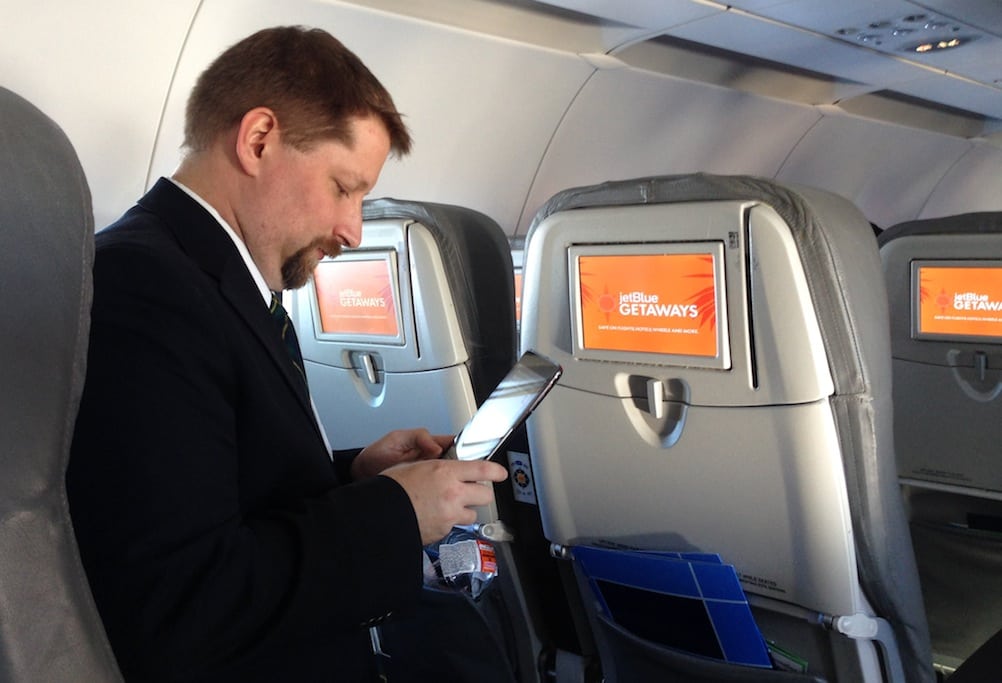
Airlines have no trouble getting passengers to use Wi-Fi -- when it's offered for free. The brand benefits would be enormous if JetBlue kept it that way. Other airlines should consider doing likewise.
Onboard Wi-Fi isn't as simple as slapping on an antennae and charging to access the Internet. Airlines will need to develop smart models that give something away in order to make money from services people (of all ages) don't mind paying for.
Where once in-flight Wi-Fi was an insane perk that was hard to imagine (way back in 2008), it's now become so expected that both airlines and providers are in a race to provide the fastest -- if not the cheapest -- connection.