
Luxury Hotelier Oberoi Group Stays the Course by Focusing on One Brand
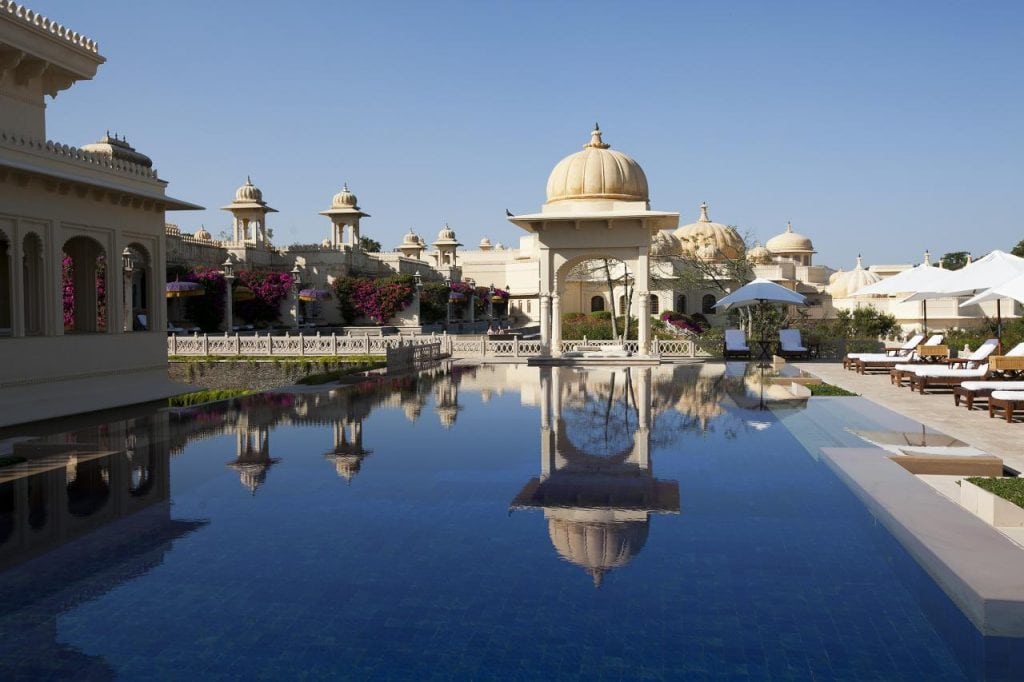
Photo Credit: The hotel swimming pool of the Oberoi Udaivilas, Udaipur, Rajasthan. Wikimedia
Skift Take
There is something to be said for the will to survive through hardship. Other hospitality groups should take note of the Oberoi Group story. India's luxury hotel group is one of the subjects in Skift’s recent sixth anniversary book, For the Long Haul, Lessons on Business Longevity, whose chapters we are excerpting for you here in the coming weeks.
It all started with a plague.
In 1922, 24-year-old Mohan Singh Oberoi fled his hometown of Bhaun, India, in the Punjab province, now a region of Pakistan. He was penniless, but his mother, who raised him alone, urged him to escape the virulent outbreak overtaking their village and find work in Shimla, India, a nearby city. He spent the summer rambling around the countryside, desperately trying to land a job. One day, he walked into the Hotel Cecil and asked if there were any openings. To Oberoi’s surprise, the manager hired him as a front desk clerk.
A decade later, in 1934, Oberoi had an opportunity to acquire the hotel, and mortgaged his wife’s jewelry in order to buy the property. His next acquisition came in quick succession, after a massive cholera outbreak killed over 1,500 people in Calcutta, India, one of the country’s largest cities. After 100 foreign guests died from drinking water at The Grand Hotel, one of Calcutta’s most elegant destinations, the property was


.jpg)