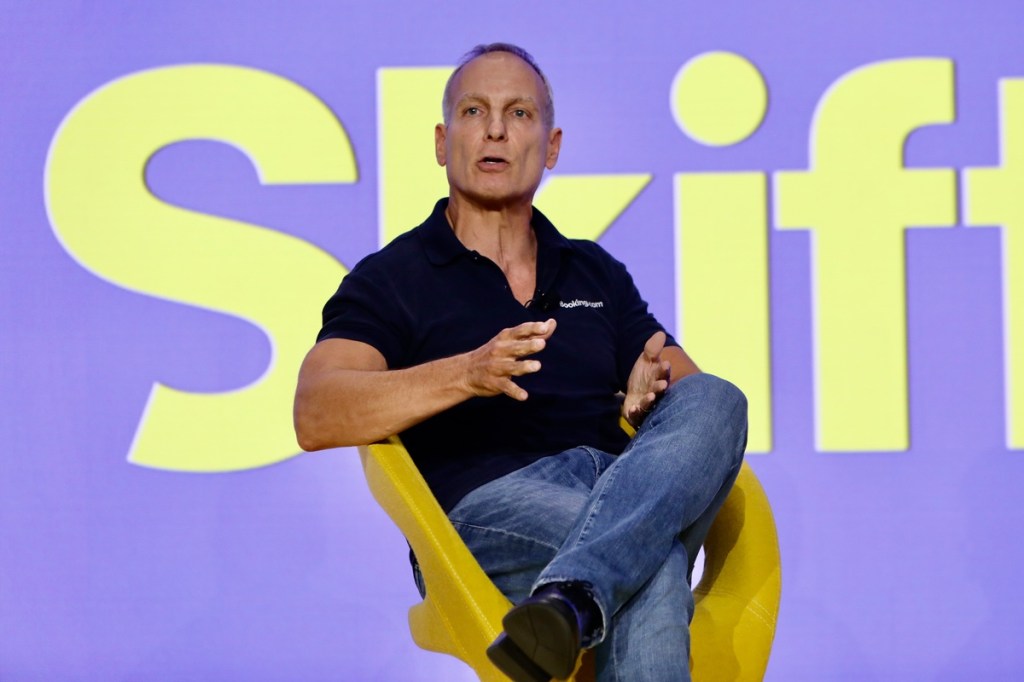
The moment an AI agent handles the complexity of travel, the intermediation layer will have to answer why it exists — or at least why it commands the margin it does.
Booking Holdings could survive hotel chains switching allegiances to the LLMs. But how long would it take for independent hotels to likewise jump ship?
Expedia's annual filing now treats AI agents as a major threat, not just a competitive pressure. The company is betting that direct engagement can keep it from becoming an invisible backend.
Reports are coming in about layoffs, from London to Uruguay, showing the impact of Sabre’s ‘inflation offset program.’ That and several leadership shifts show how Sabre is restructuring around agentic AI.
There are conflicting messages at Tripadvisor these days. Goldberg told employees that it "will take time" for its 3-month-old strategy revamp "to show up in the numbers." Meanwhile, activist investor Starboard Value argued "the time for incrementalism is over."
We sometimes think of independent hotels as relatively powerless given the strength of the OTAs and the big hotel chains. Will agentic AI turn the tables?
Agentic AI will likely access APIs to compare pricing. But those queries would have severe limitations and will ultimately require more rigorous solutions to ensure a deal is really a deal.
In an era when speed to market is a given, Chesky is arguing that nice and easy does it will win the day. It would be better to say, "We are behind in our AI development, but we are confident that we will get to where we need to be."
Google just got a run for its money: Sabre, PayPal, and Mindtrip join forces to let travelers plan and book trips inside AI chats. If it works, it’s another sign the next distribution shift may come from travel’s own stack, not just Big Tech.